
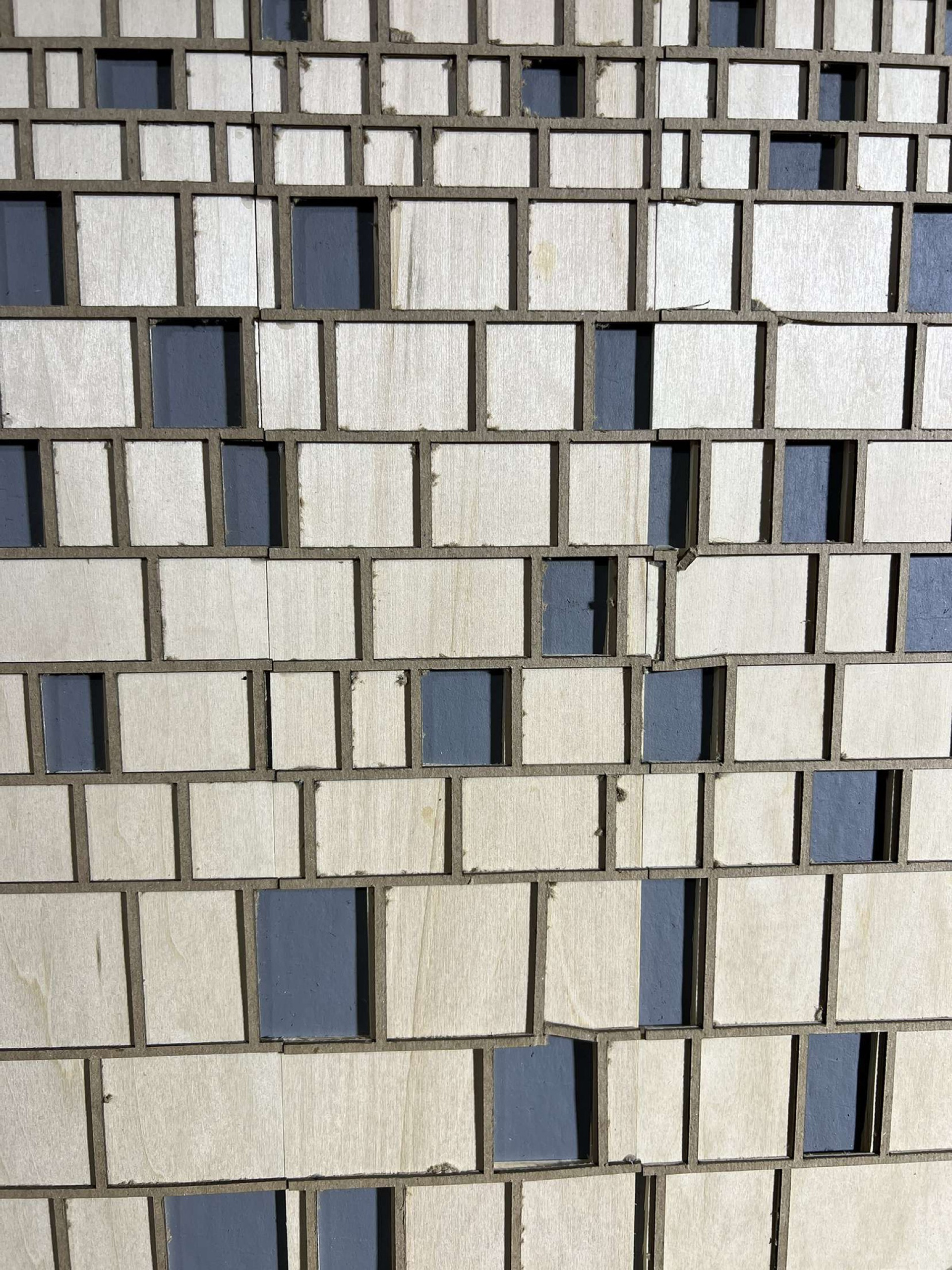
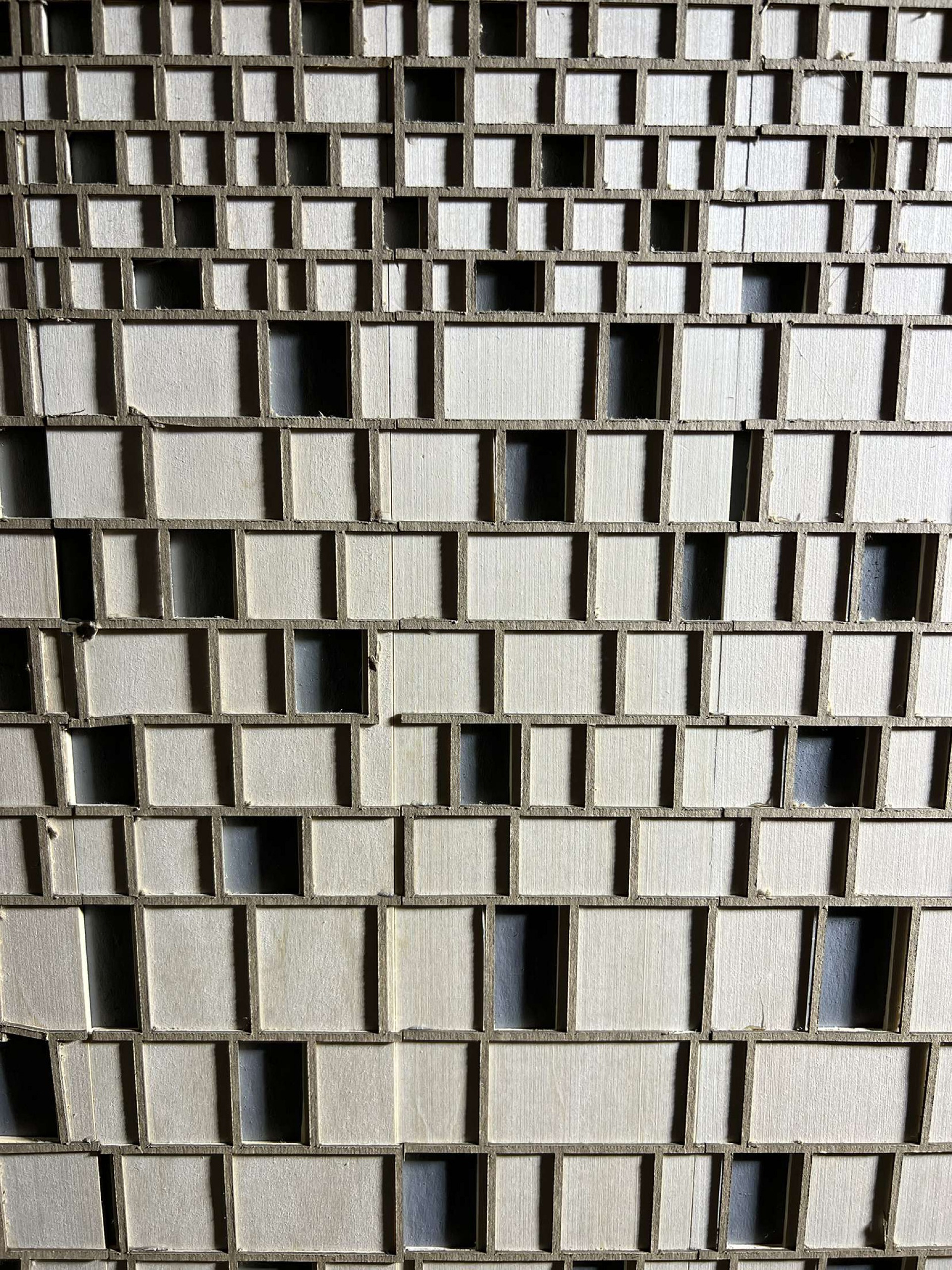
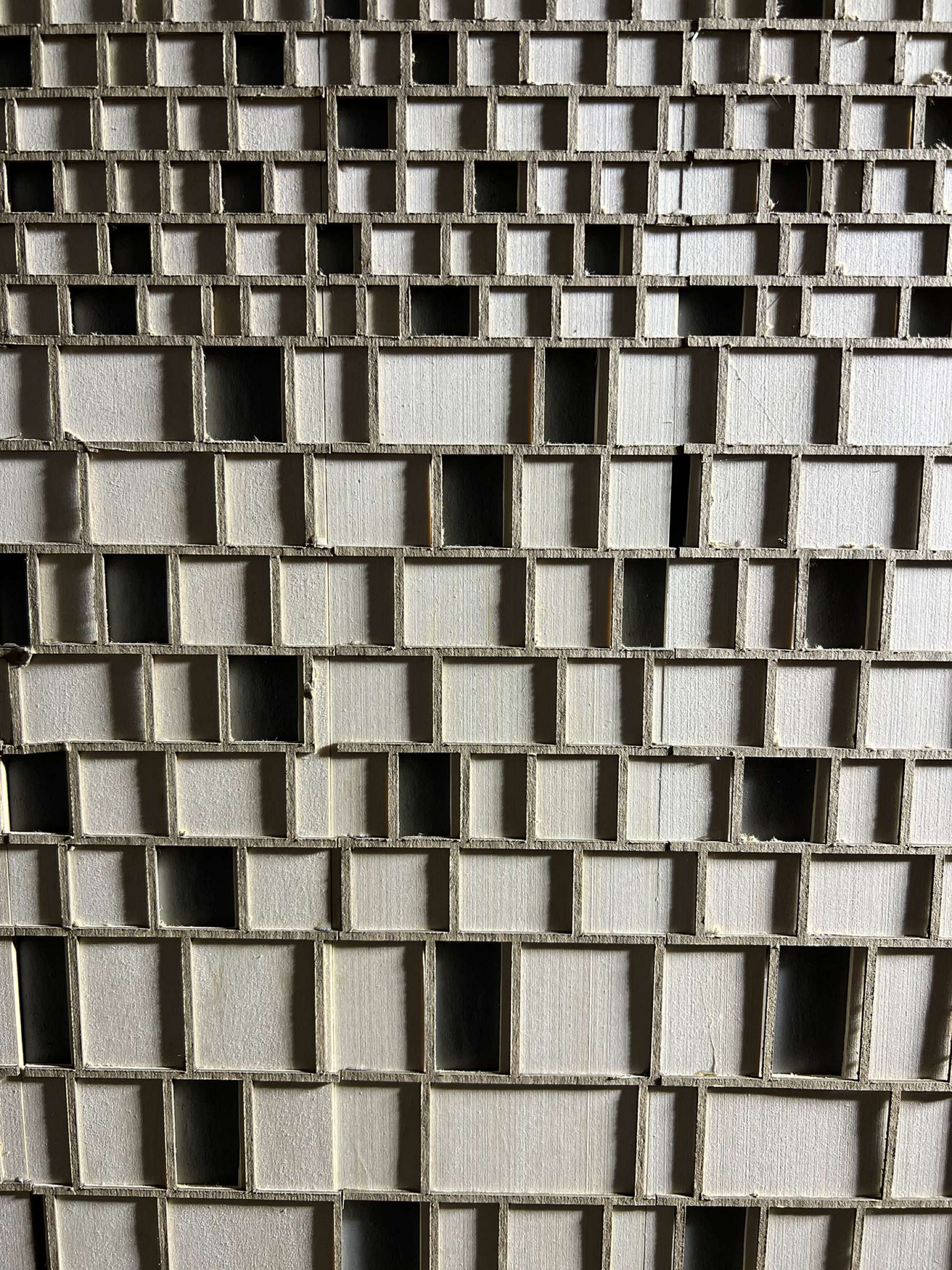
Studio 04 began with a focus on façades and their ability to hold symbolism. While Kéré Architecture's Berlin Exilmuseum proposal shown below was never built, its façade represented a tragic era in German history, and would have served exceptionally well as a reminder. It would have sat in front of the grand entrance of the Anhalter Bahnhof railway terminus, now a ruin of what was once the greatest transportation hub in Europe, but one that also carried the weight of the Nazi regime. The station, along with two others, was responsible for the deportation of approximately 50,000 Jews throughout the second world war. Kéré’s Exilmuseum proposal captures the pain of those ripped from their homes and loved ones.
Diagrams and Symbolic Analysis
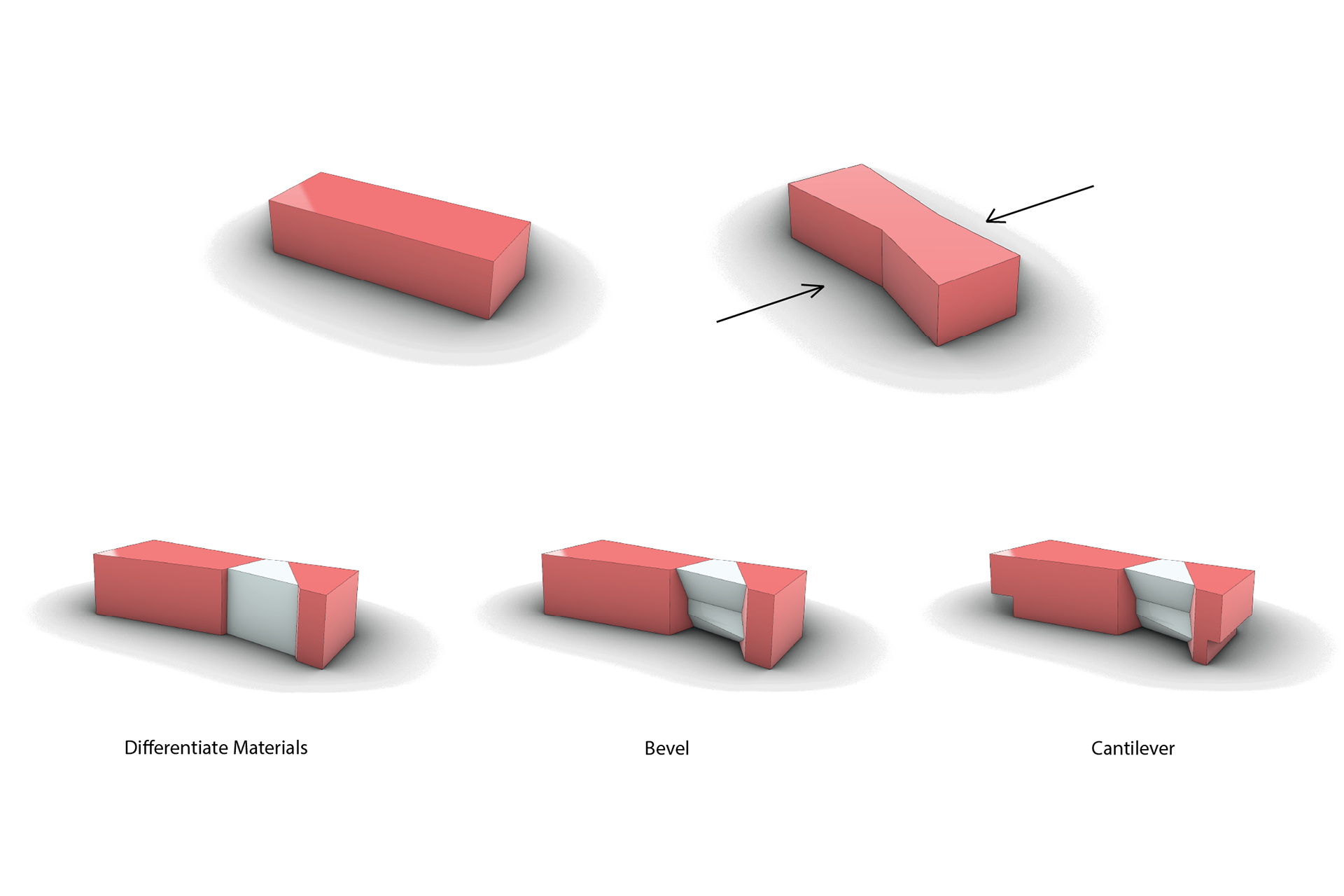
Transforming Masses
While the striking façade does catch the eye first, the manipulation of the structure's geometry shapes the symbolism as well, the splitting of the structure in two using glass is the first extreme change in mass and material. Sitting directly behind the terminal's ruin, it is not only representative of the “fissure” that the station caused in Nazi-controlled Germany, as it separates the building in two, but the glass also represents the new modern Germany conquering the old one, piecing the structure back together with light, metaphorically suggesting light ahead of every darkness.
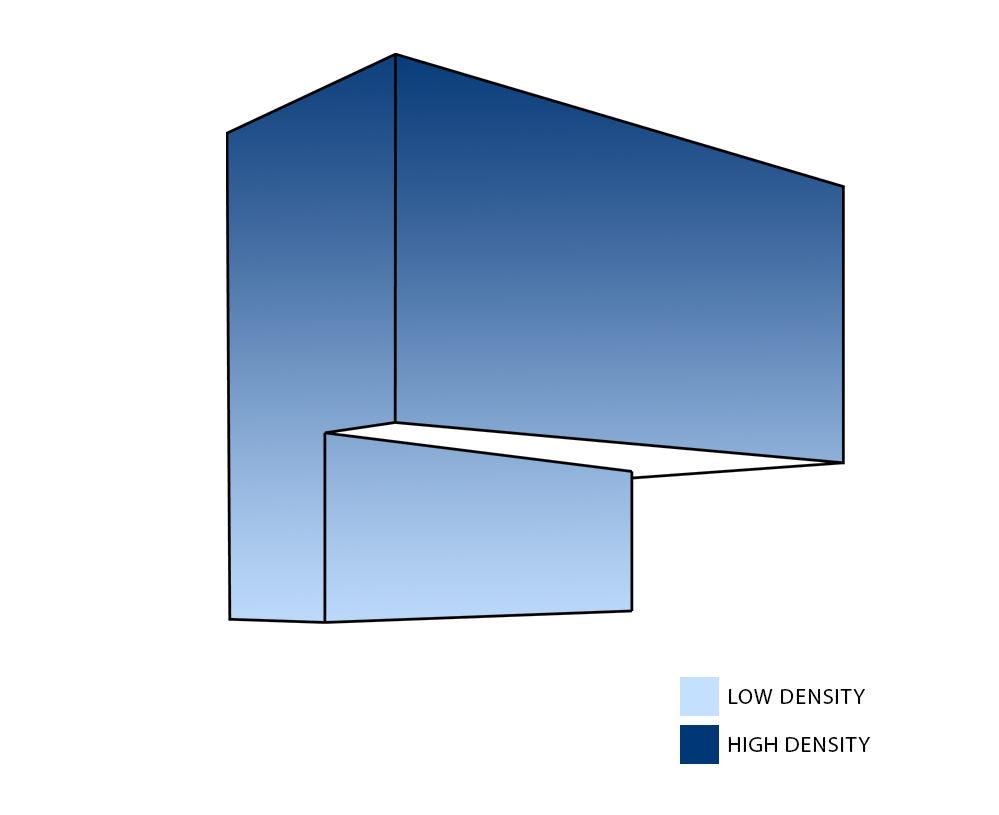
Density of the Façade
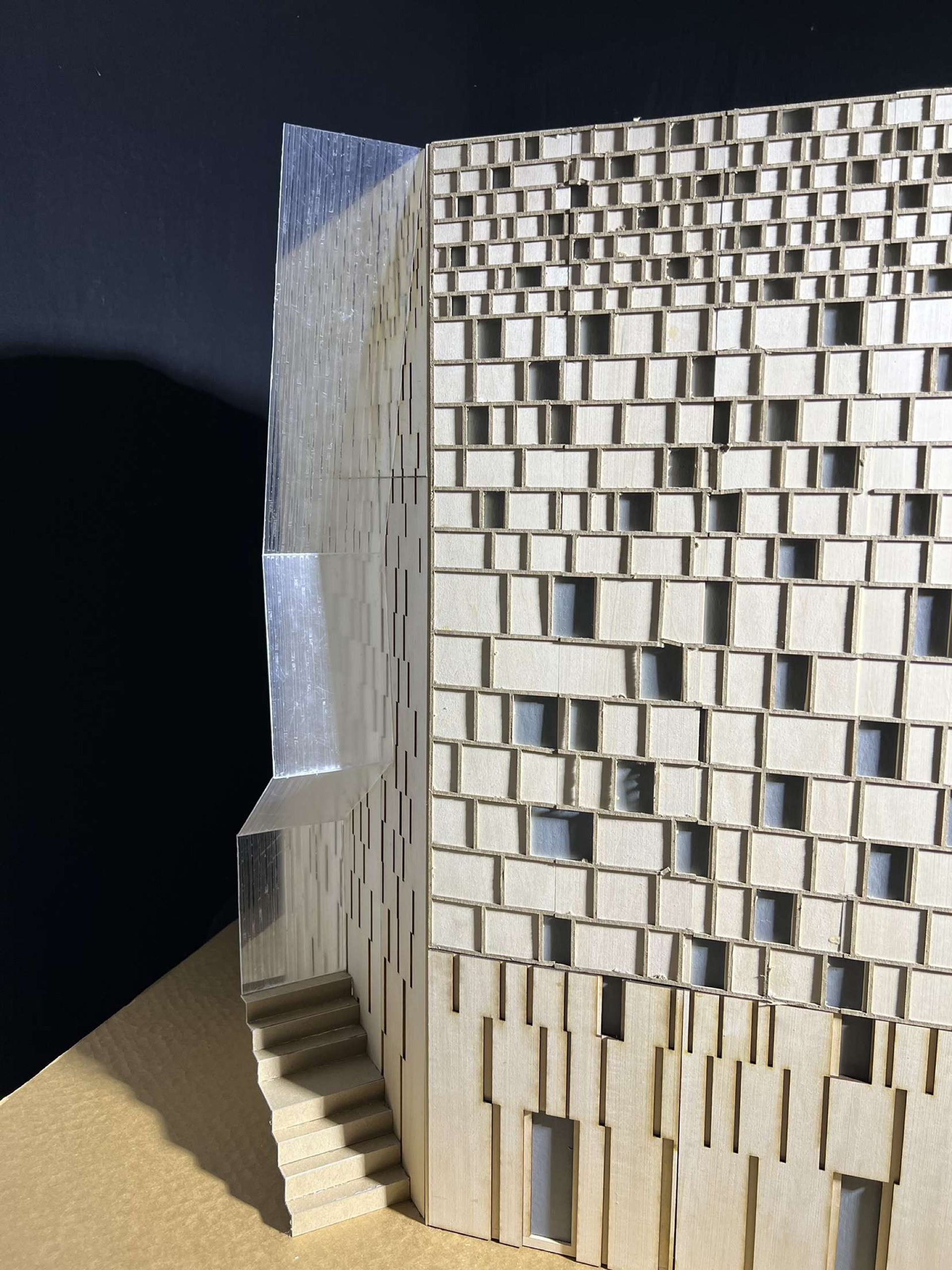
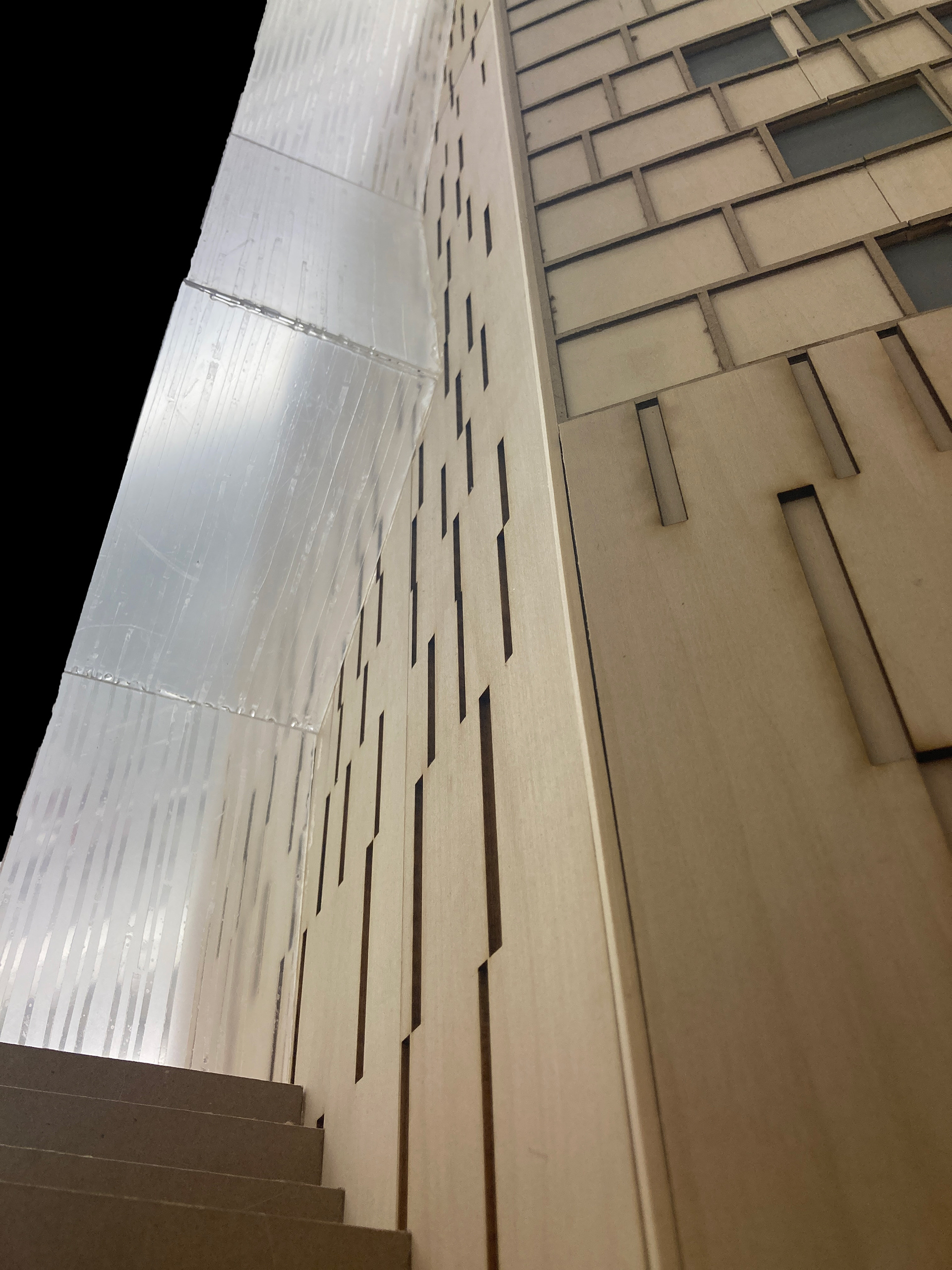
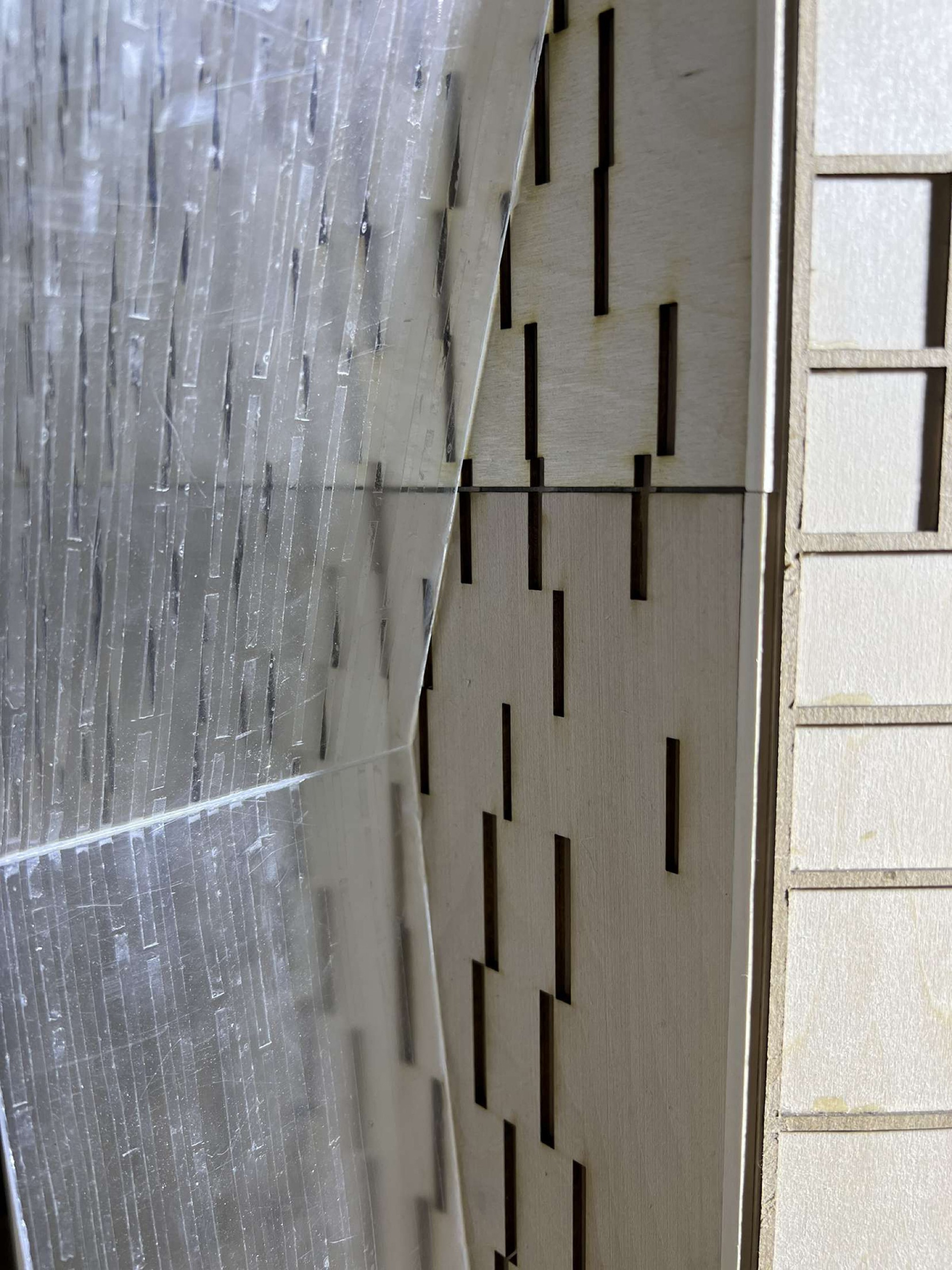
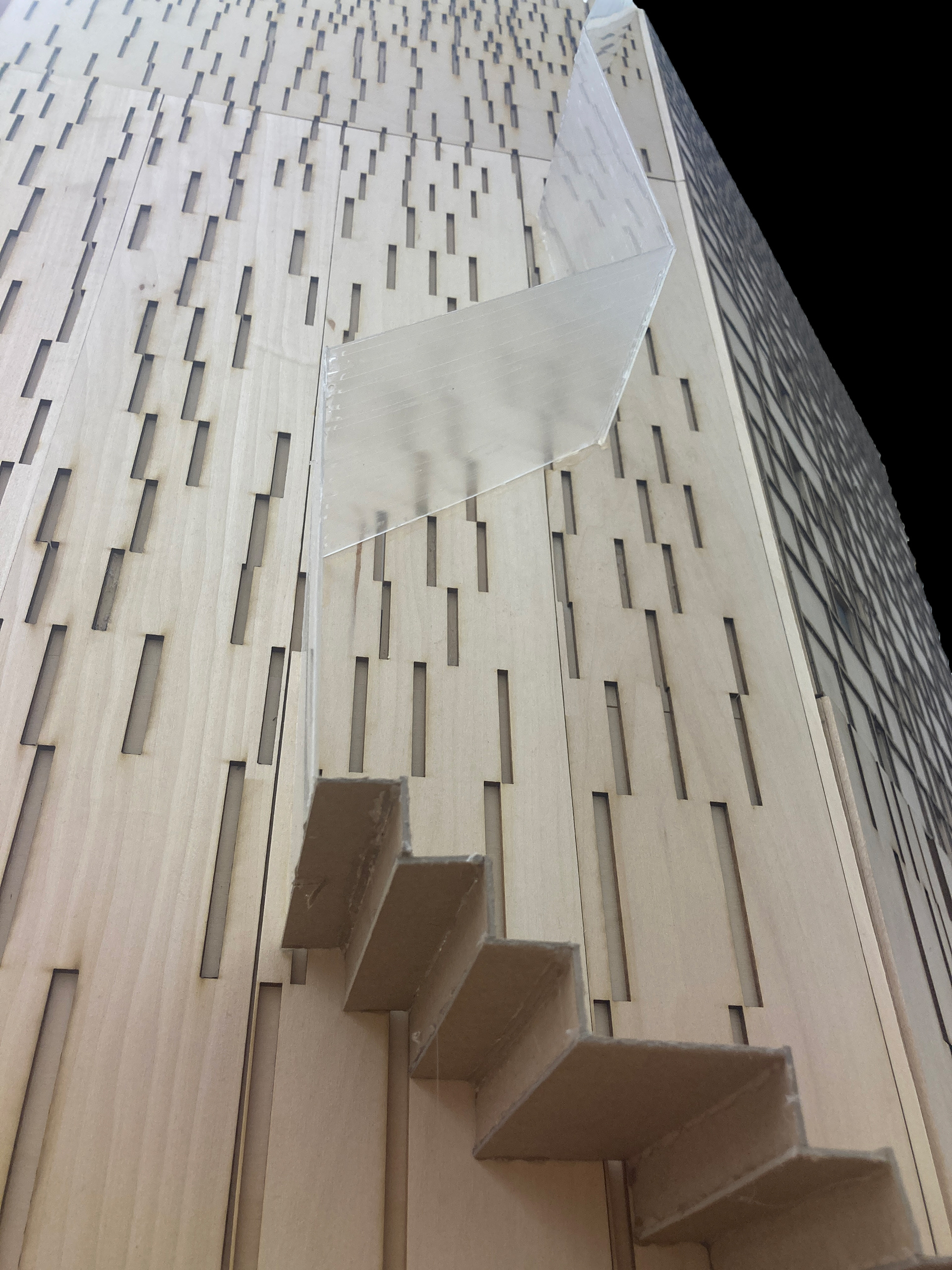
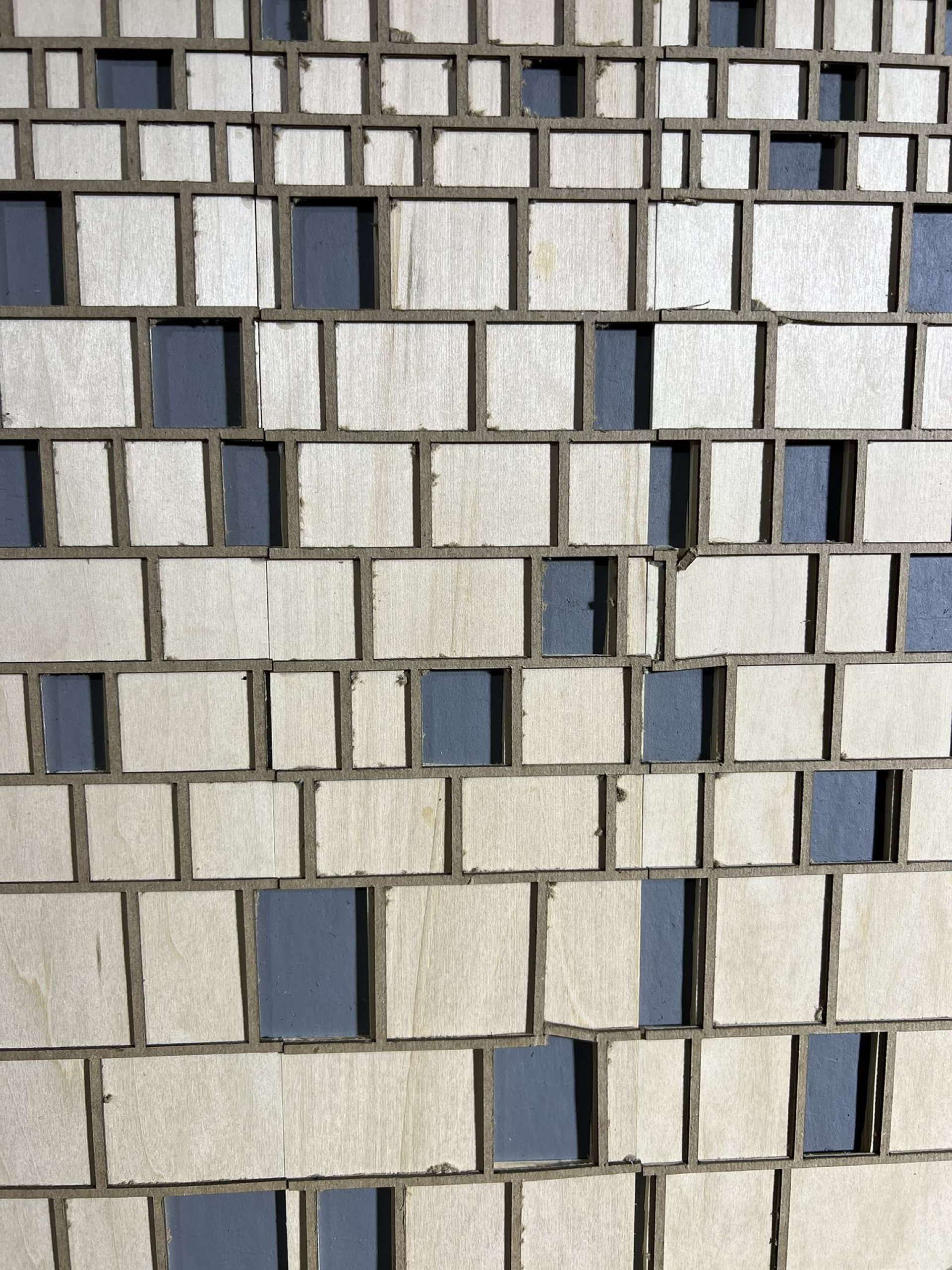
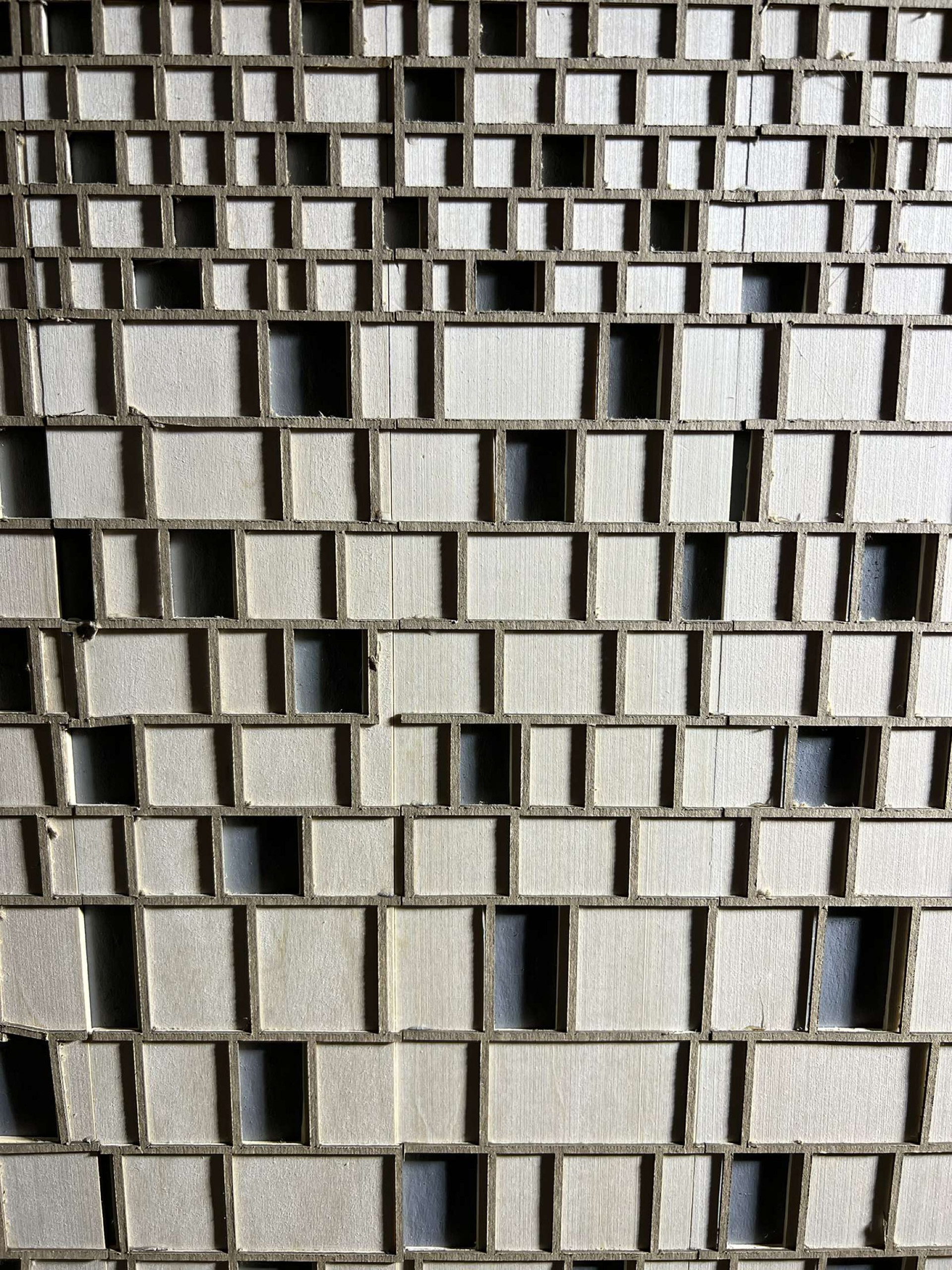
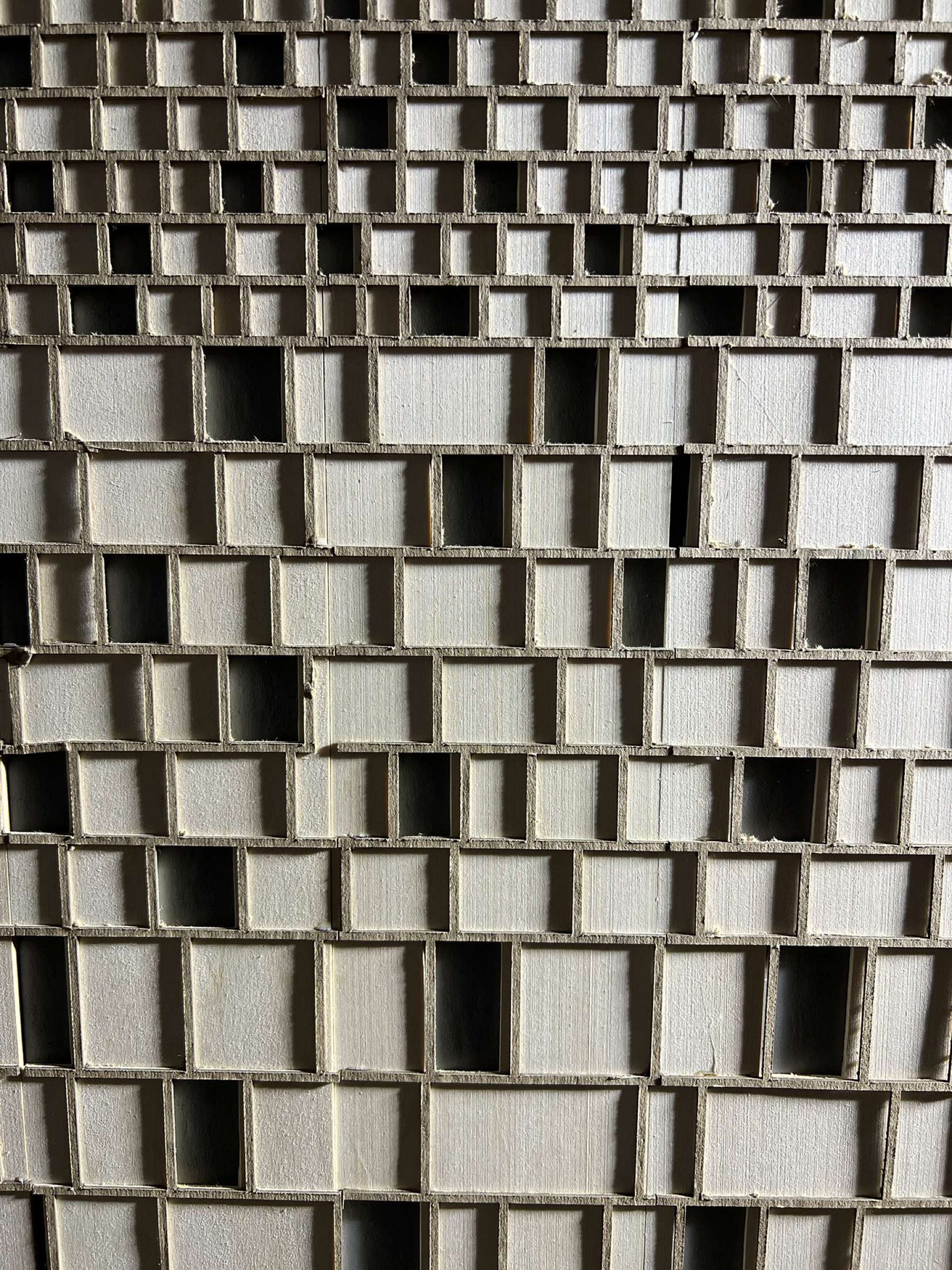
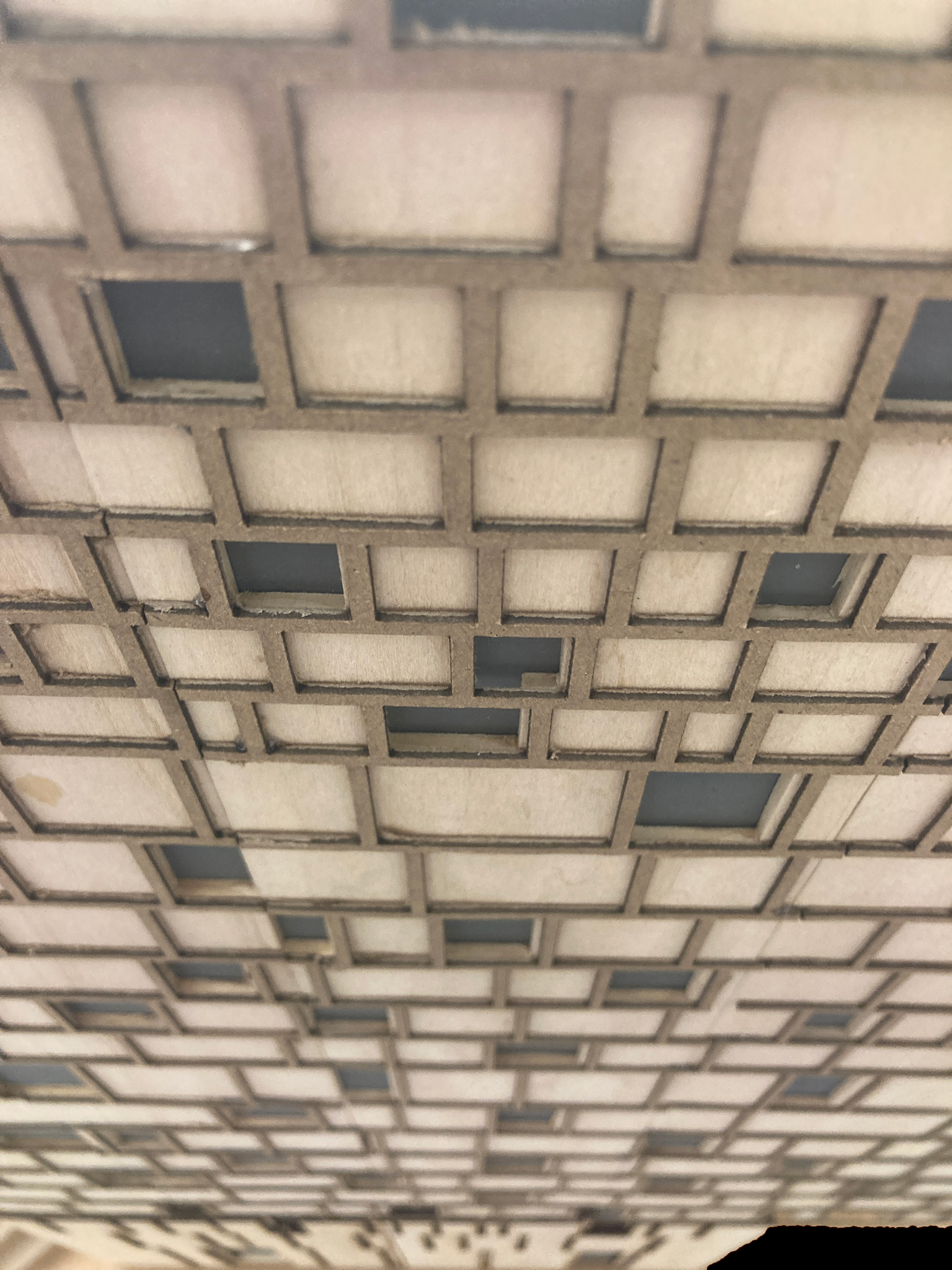
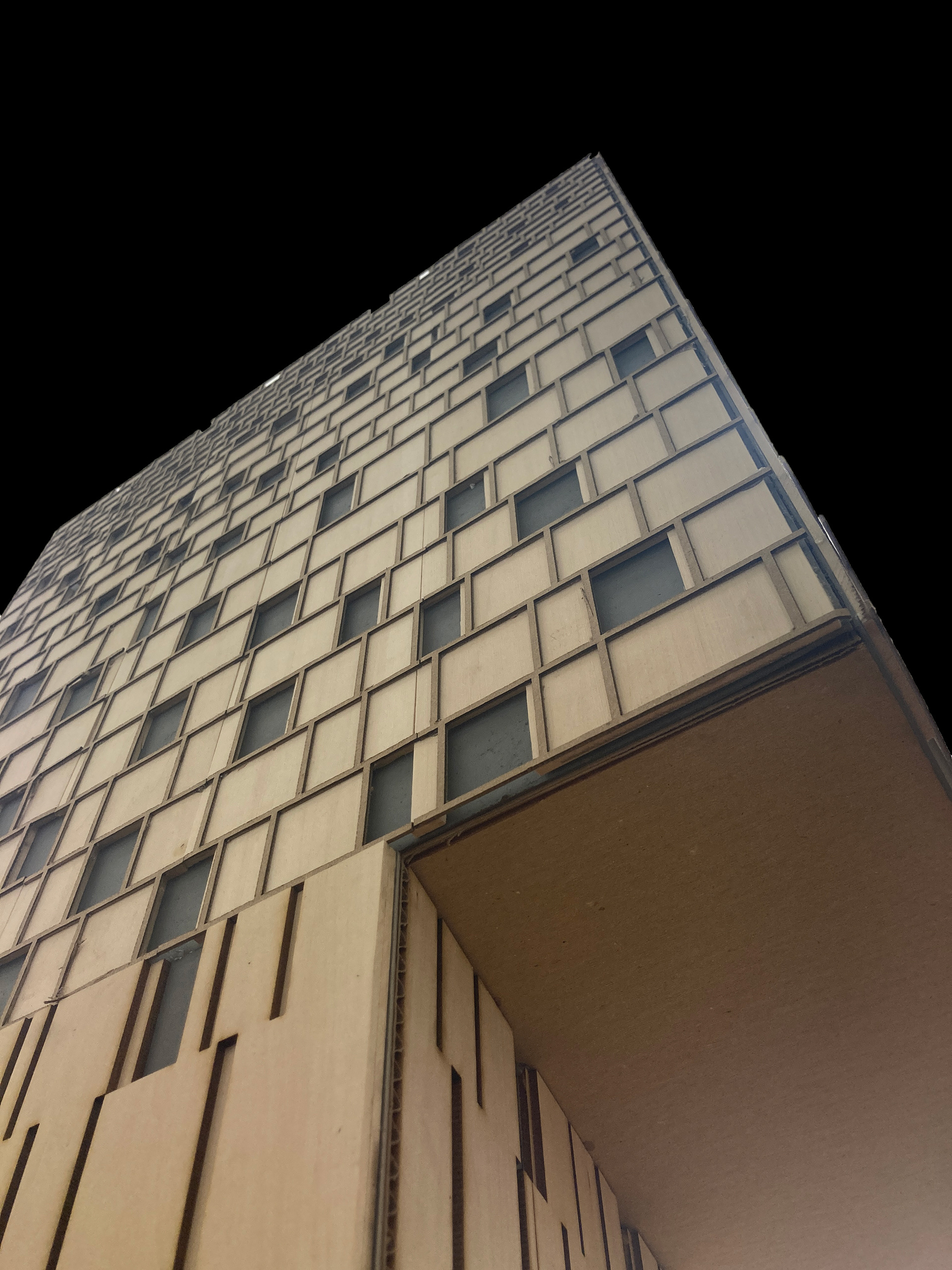
The colorful stonework sits in layers on steel ledges, then laid on to the concrete face, presenting clear contrast between the glass entrance and the exhibit wings. The crescendo of density and color on the façade quickly catches the attention of the passerby, as large stone panels seem to shrink and blend together as the building stretches into the sky. The sectional model focused on contrast of materials in order to produce a similar affect.
Final Sectional Model
1' = 1/4"
Credits: Hayley Clark, Kyle Sylvester