
Adapting the strip mall typology into housing using biological and rule-based networks
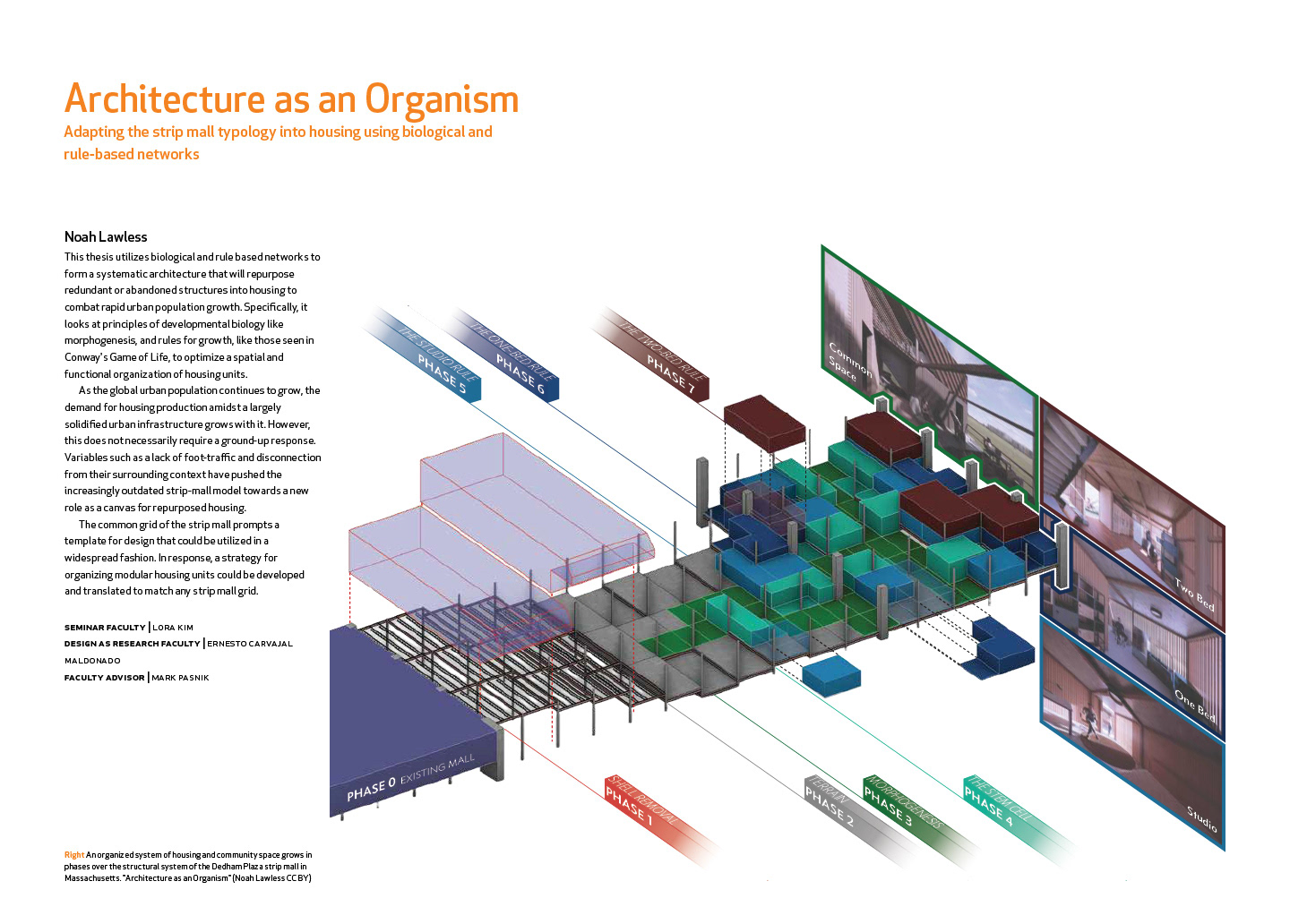
This thesis utilizes biological and rule based networks to form a systematic architecture that will repurpose redundant or abandoned structures into housing to combat rapid urban population growth. Specifically, it looks at principles of developmental biology like morphogenesis, and rules for growth, like those seen in Conway's Game of Life, to optimize a spatial and functional organization of housing units.
As the global urban population continues to grow, the demand for housing production amidst a largely solidified urban infrastructure grows with it. However, this does not necessarily require a ground-up response. Variables such as a lack of foot-traffic and disconnection from their surrounding context have pushed the increasingly outdated strip-mall model towards a new role as a canvas for repurposed housing.
The common grid of the strip mall prompts a template for design that could be utilized in a widespread fashion. In response, a strategy for organizing modular housing units could be developed and translated to match any strip mall grid.