
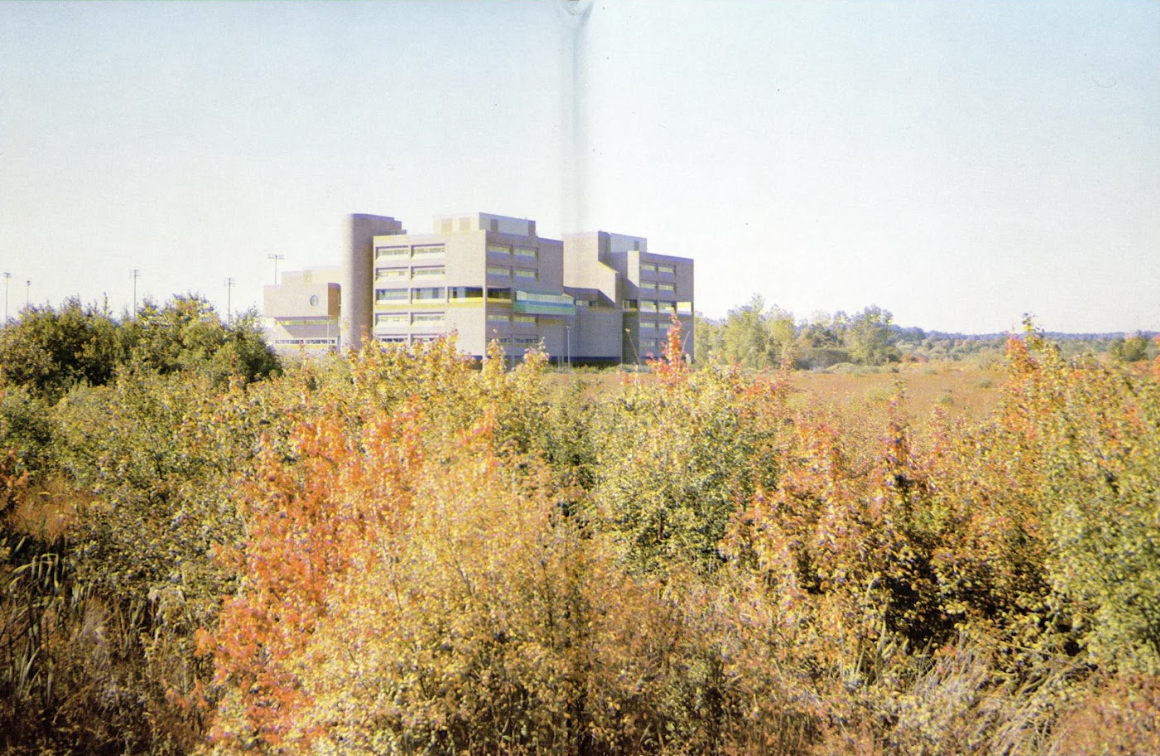
The West Roxbury Education Complex (WREC) has been out of commission since June of 2019 due to safety concerns. In June of 2023, Boston Public Schools(BPS) approached the problem with plans to redesign the WREC in order to house the John D. O’Bryant School of Mathematics and Science in Roxbury, MA, which is being slowly surrounded by its next door neighbor, Madison Park High School. Although these plans were HA by Boston Mayor Michelle Wu (as of February 2024), it is likely that BPS intends to implicate a High School project at the complex in the coming years to serve the suburbs.
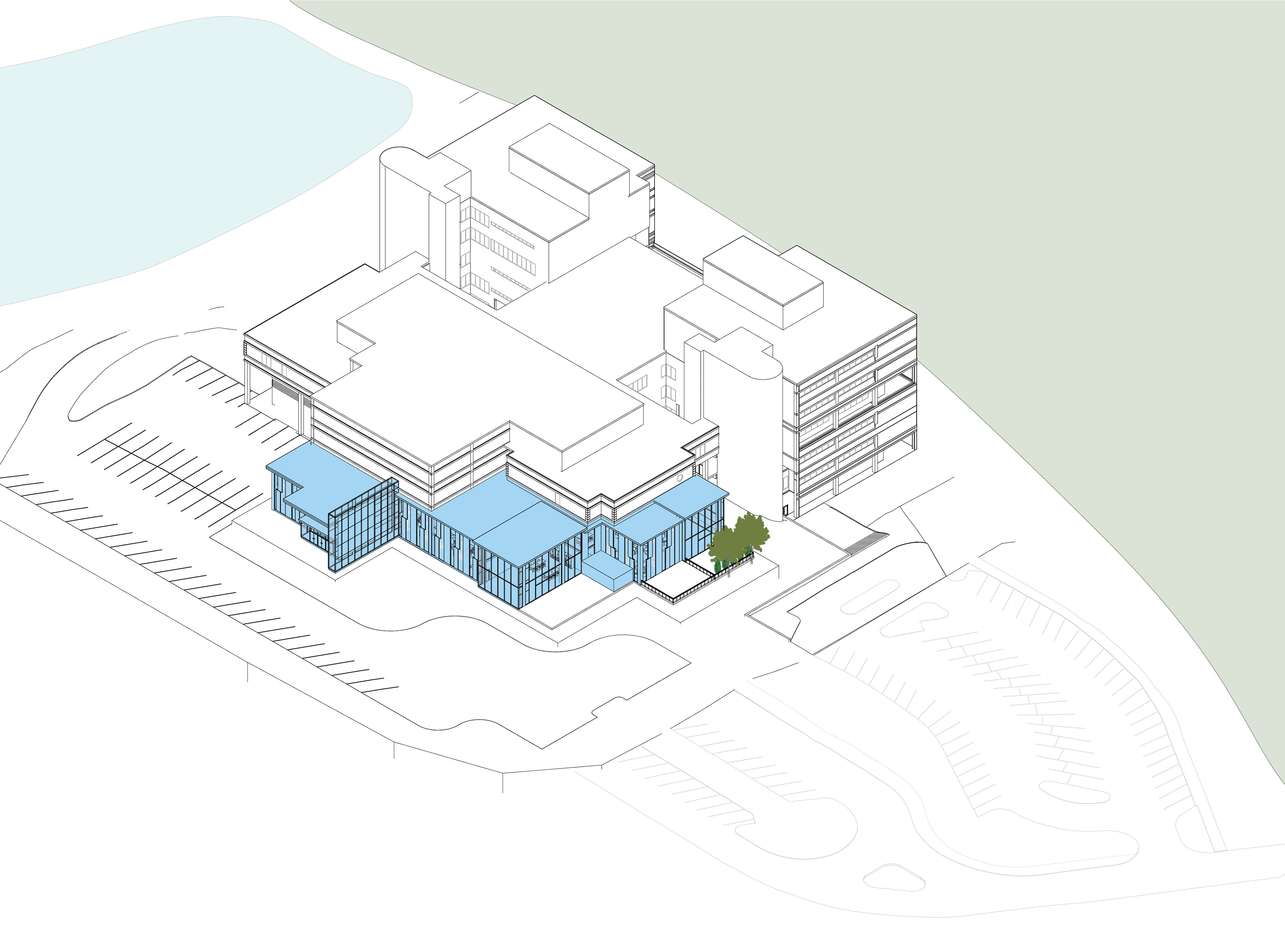
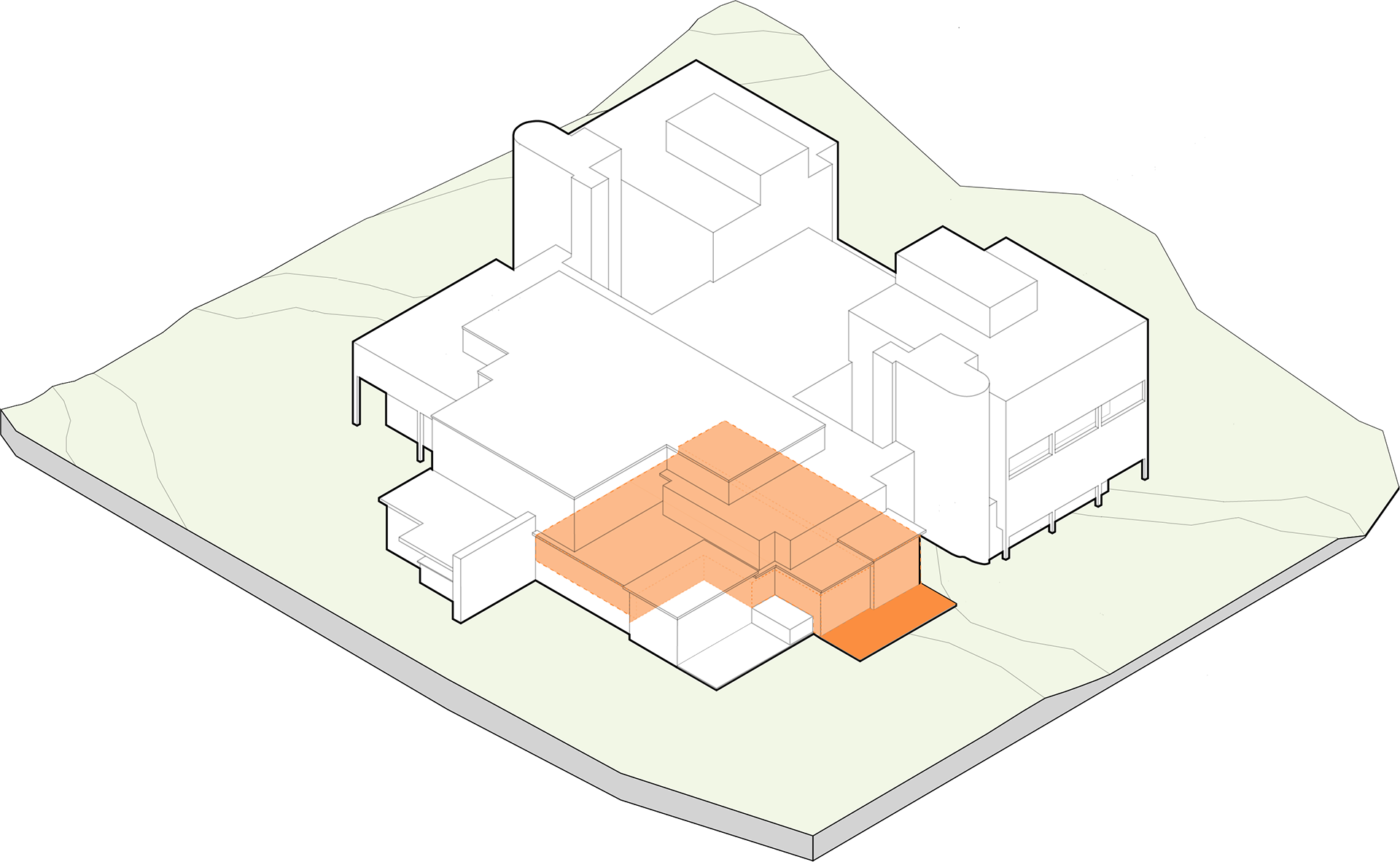
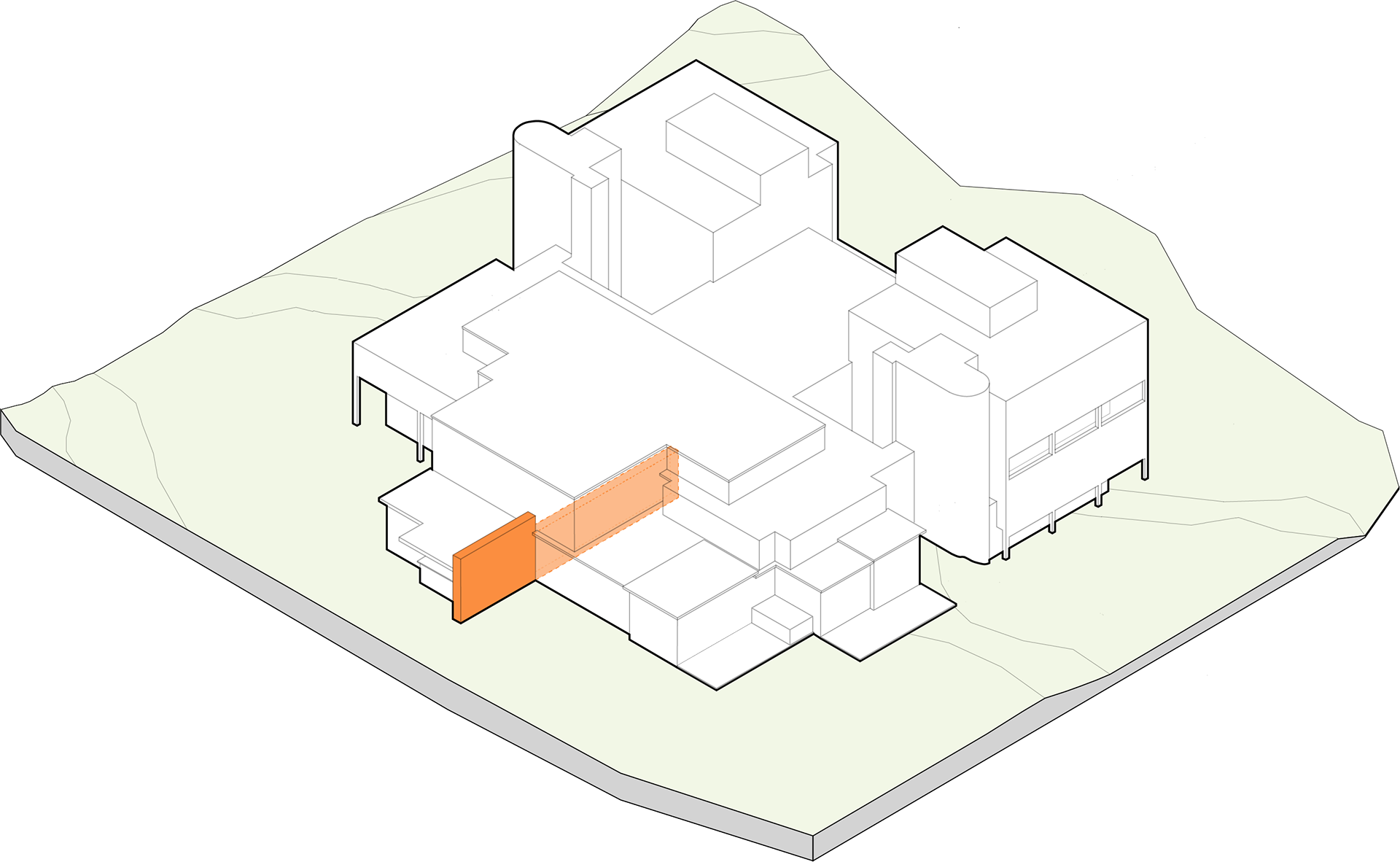
Full renovation highlighted in blue
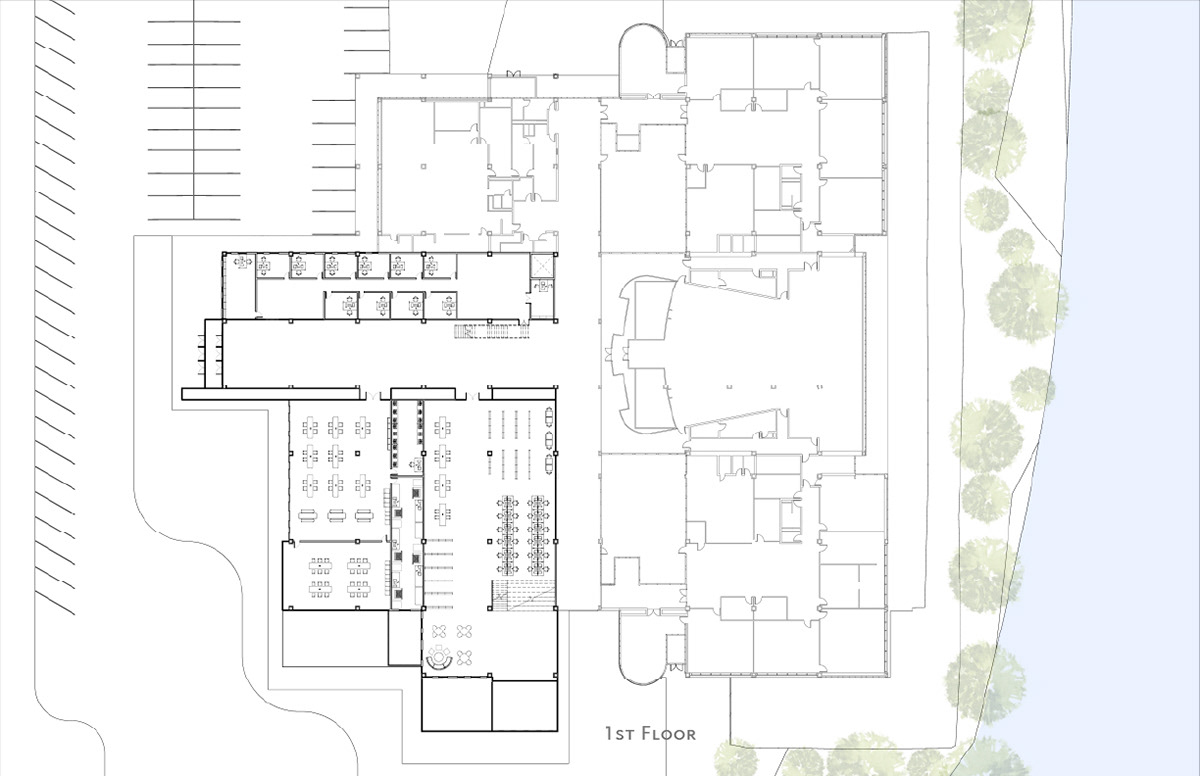
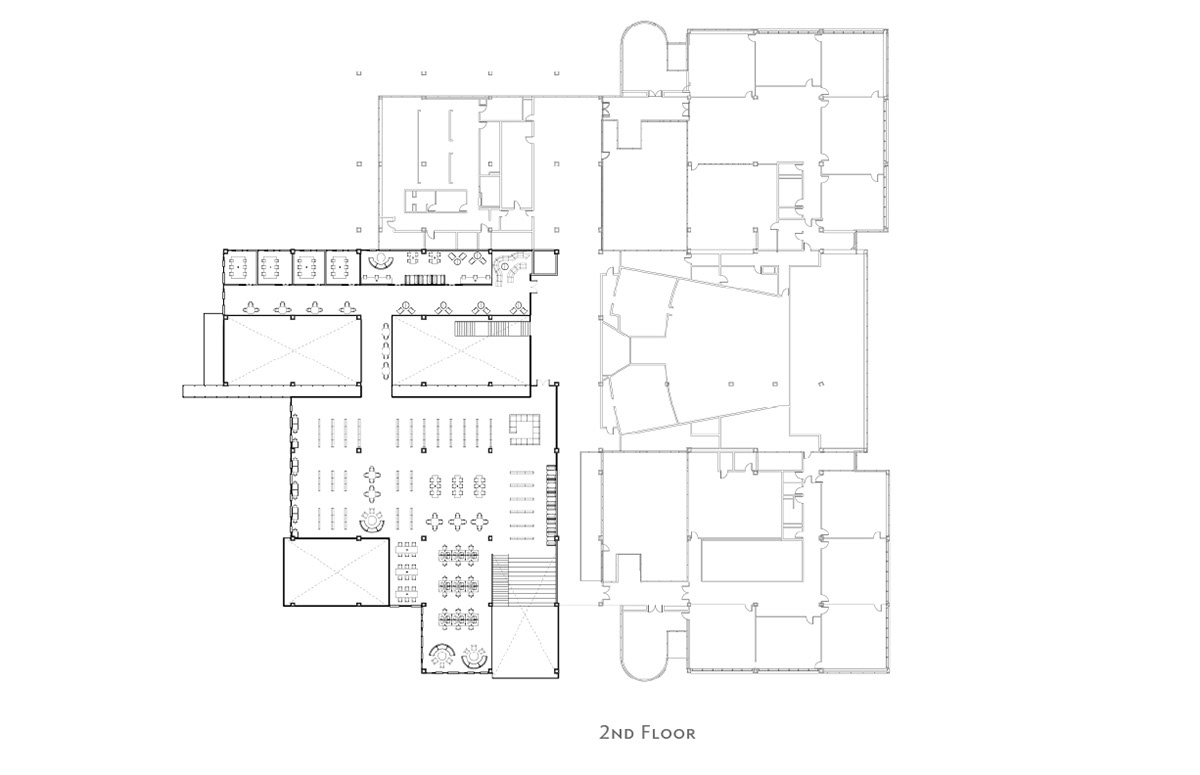
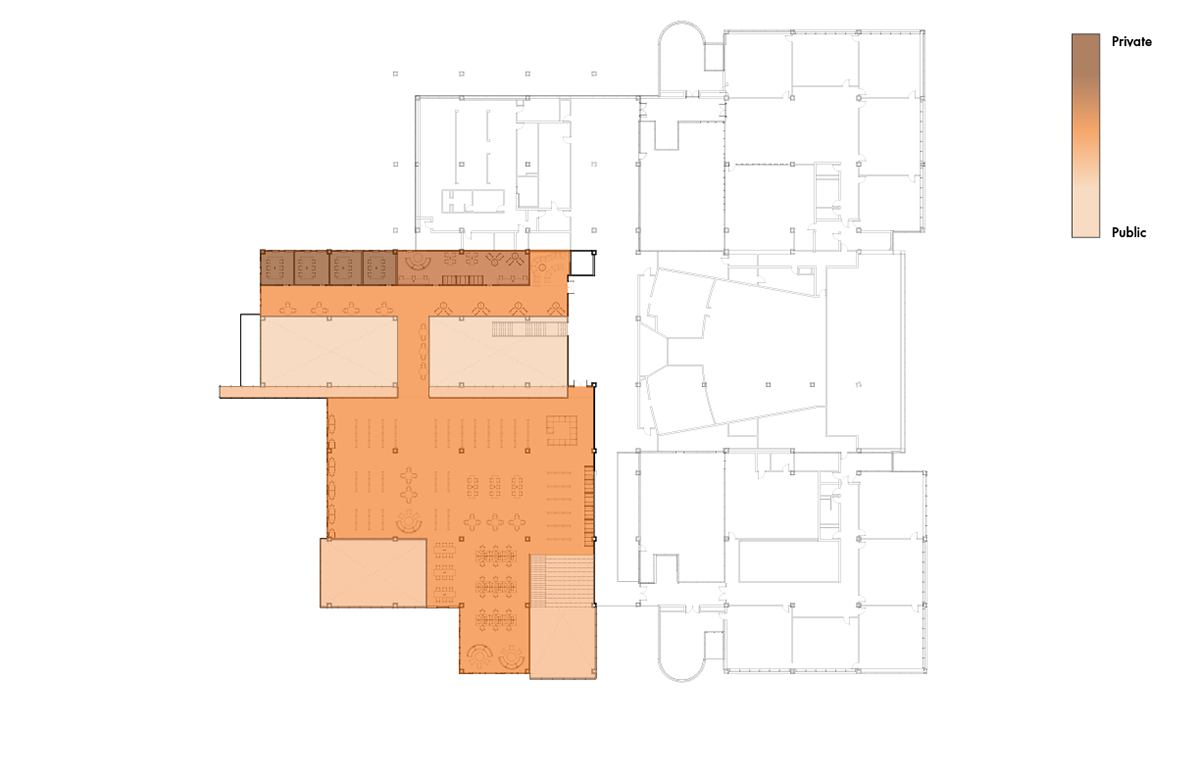
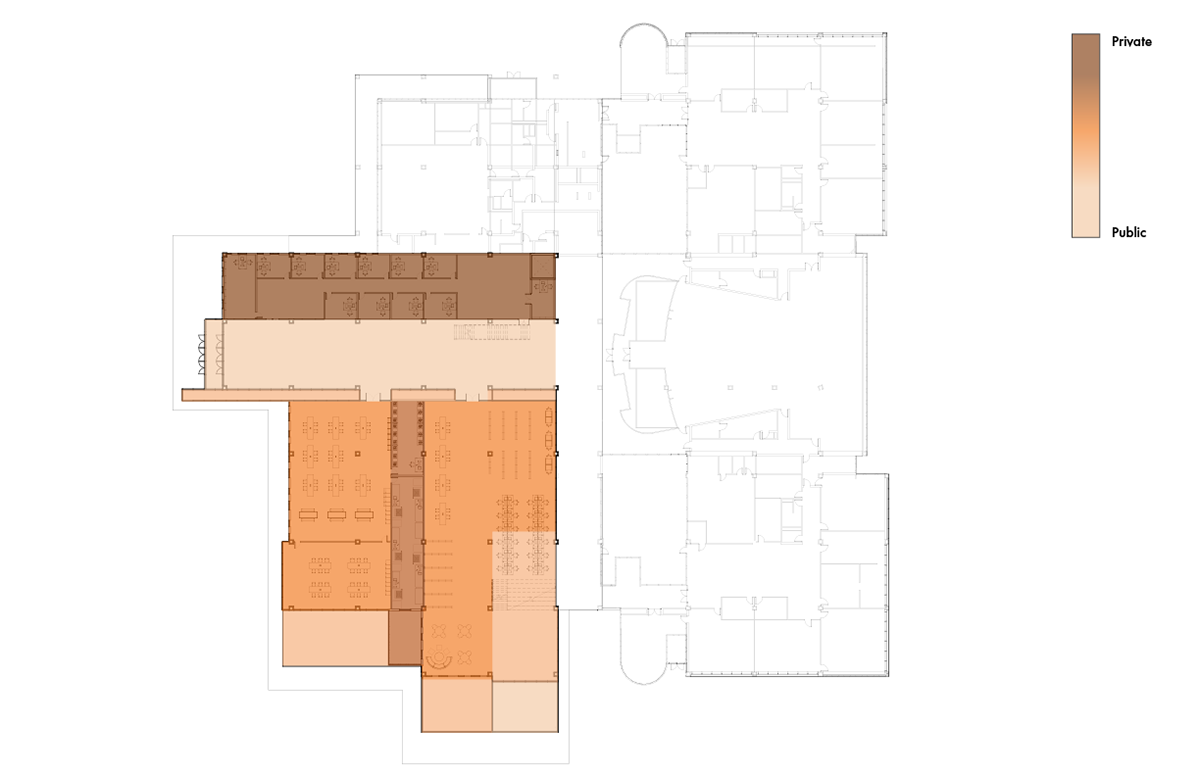
The concept of the proposal revolves heavily around the processes of a STEM (Science, technology, engineering, and math) school, with a sequence of three distinctly designed spaces in the south quarter of the school: Research, Production, and Display.
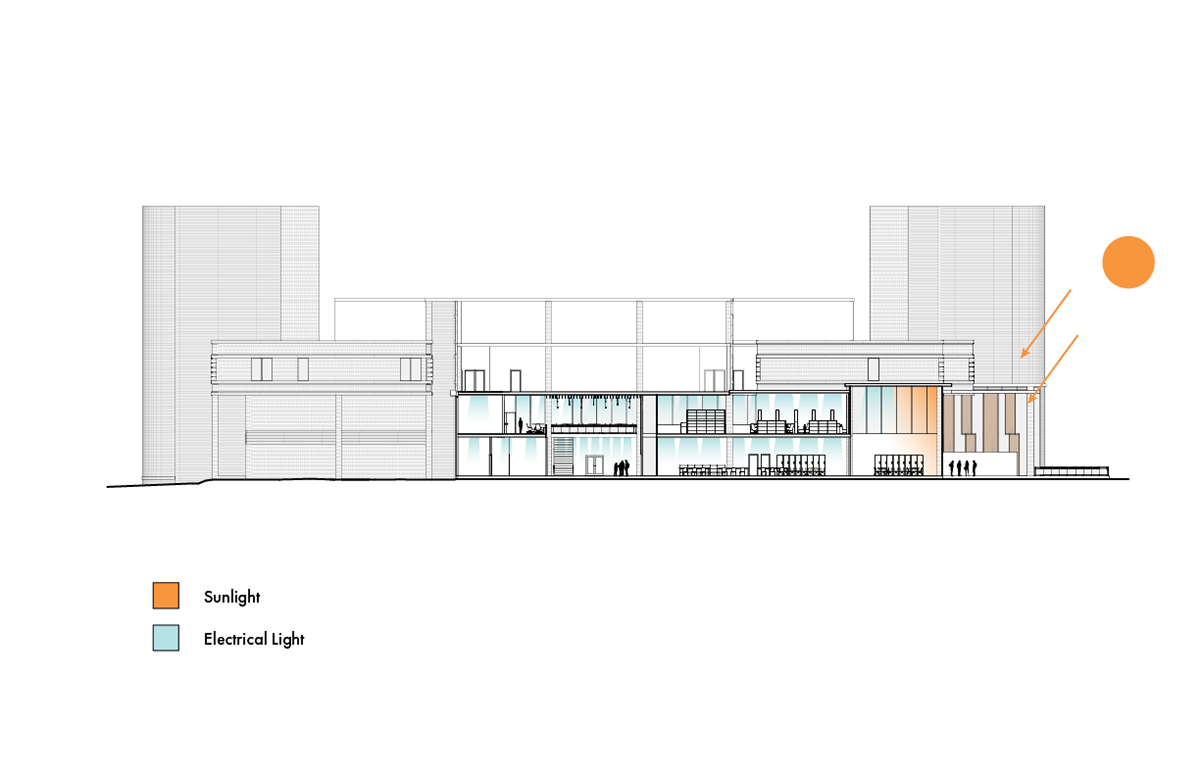
One of the main challenges of the existing school design was the library. Located above the auditorium on the third floor, the library would not be sufficient to serve a new high school. The proposal not only expands the occupancy, but provides a multitude of spaces for different academic needs, including computer labs, quiet rooms, and a teaching stair with access to an outdoor garden.
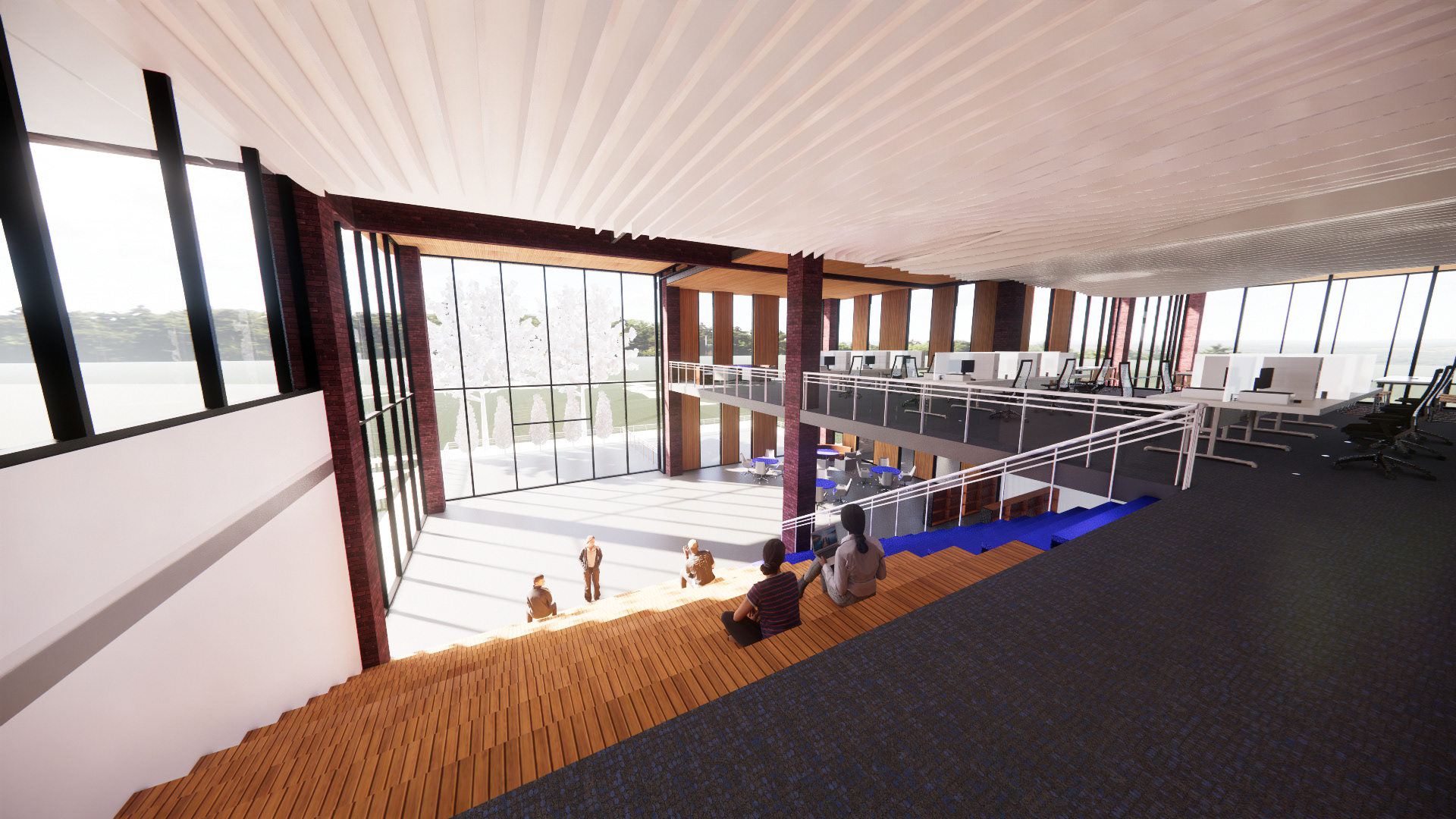
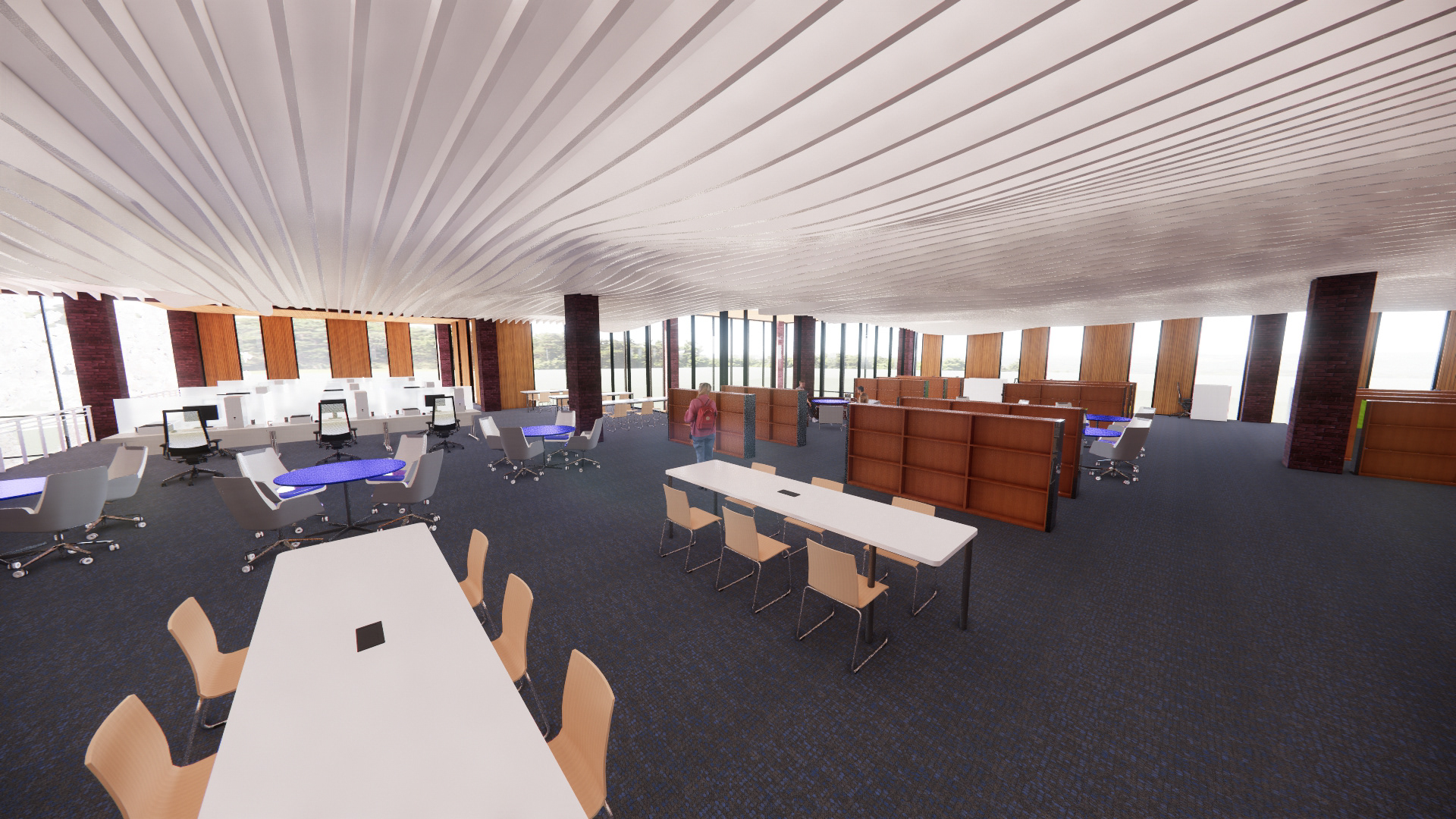
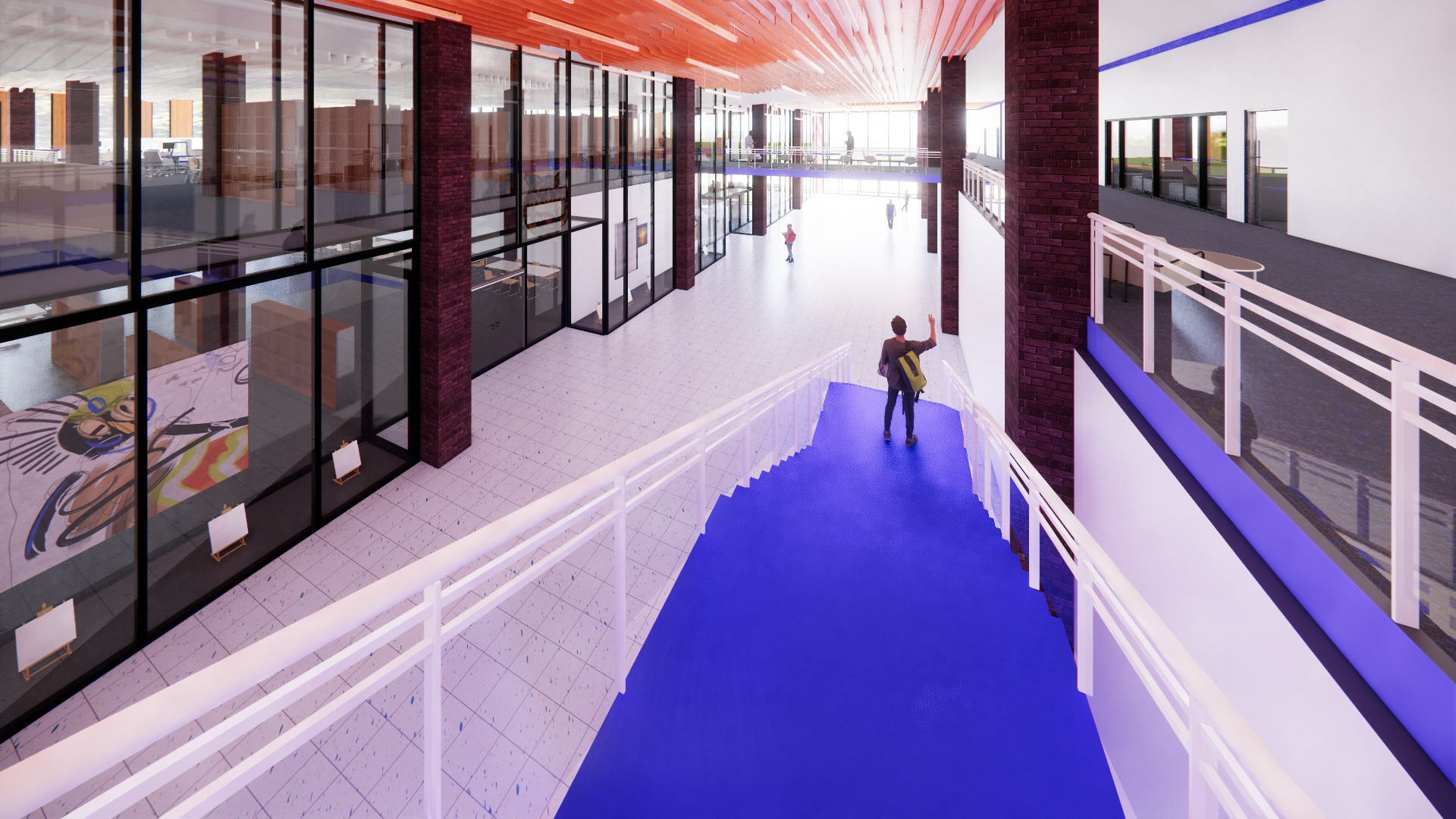
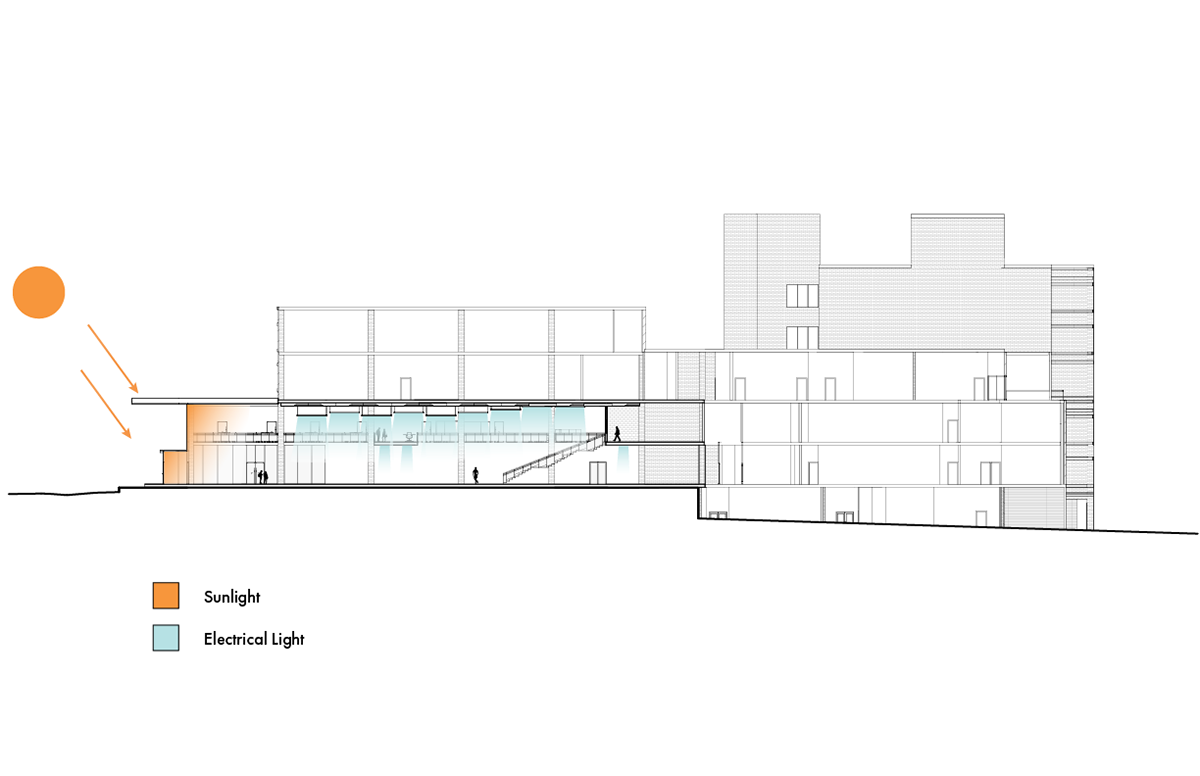
The library overlooks the production center, a double height space housing mechanical machines, laser cutters, ceramics and work stations, along with access to an outdoor woodshop and storage.
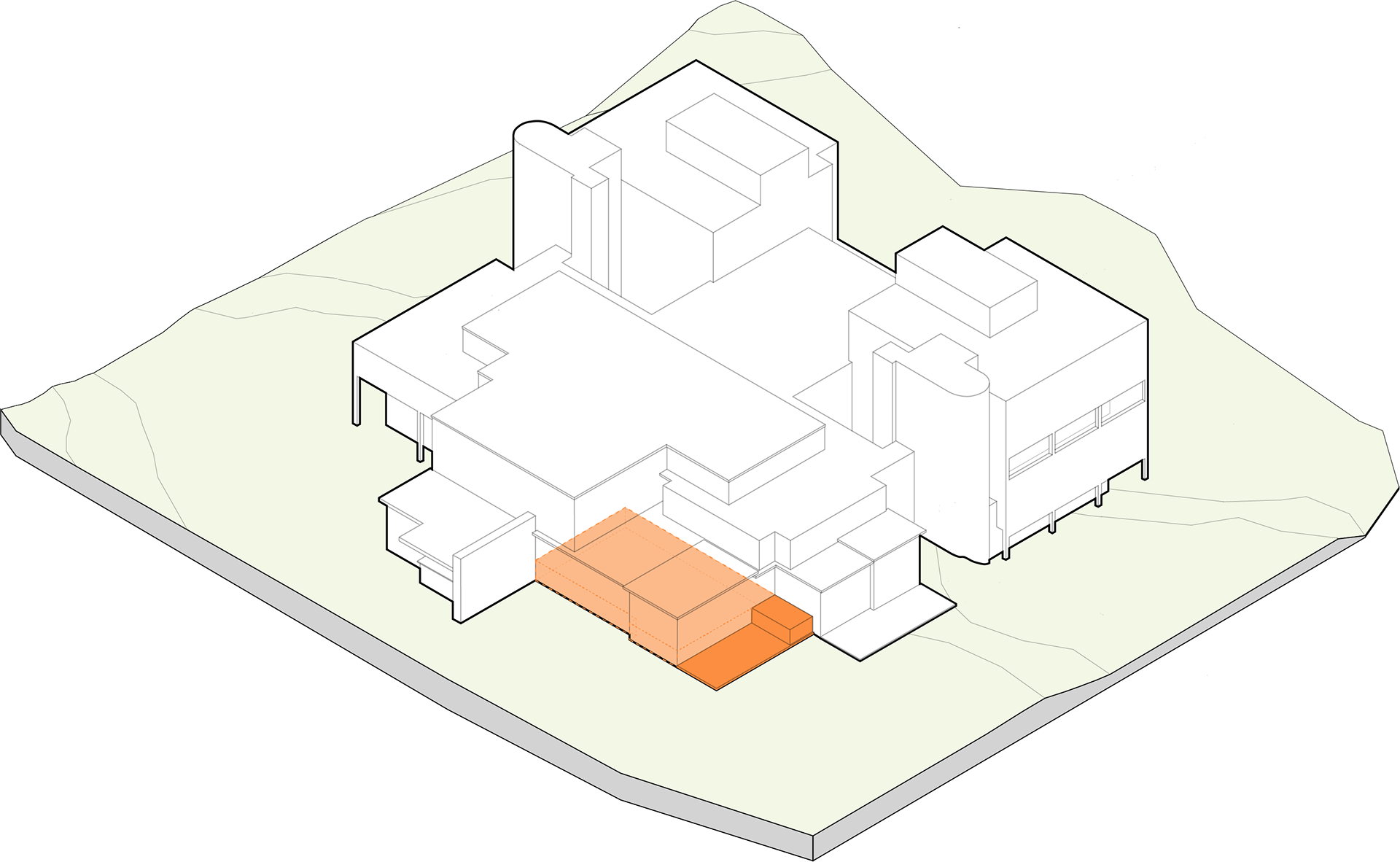
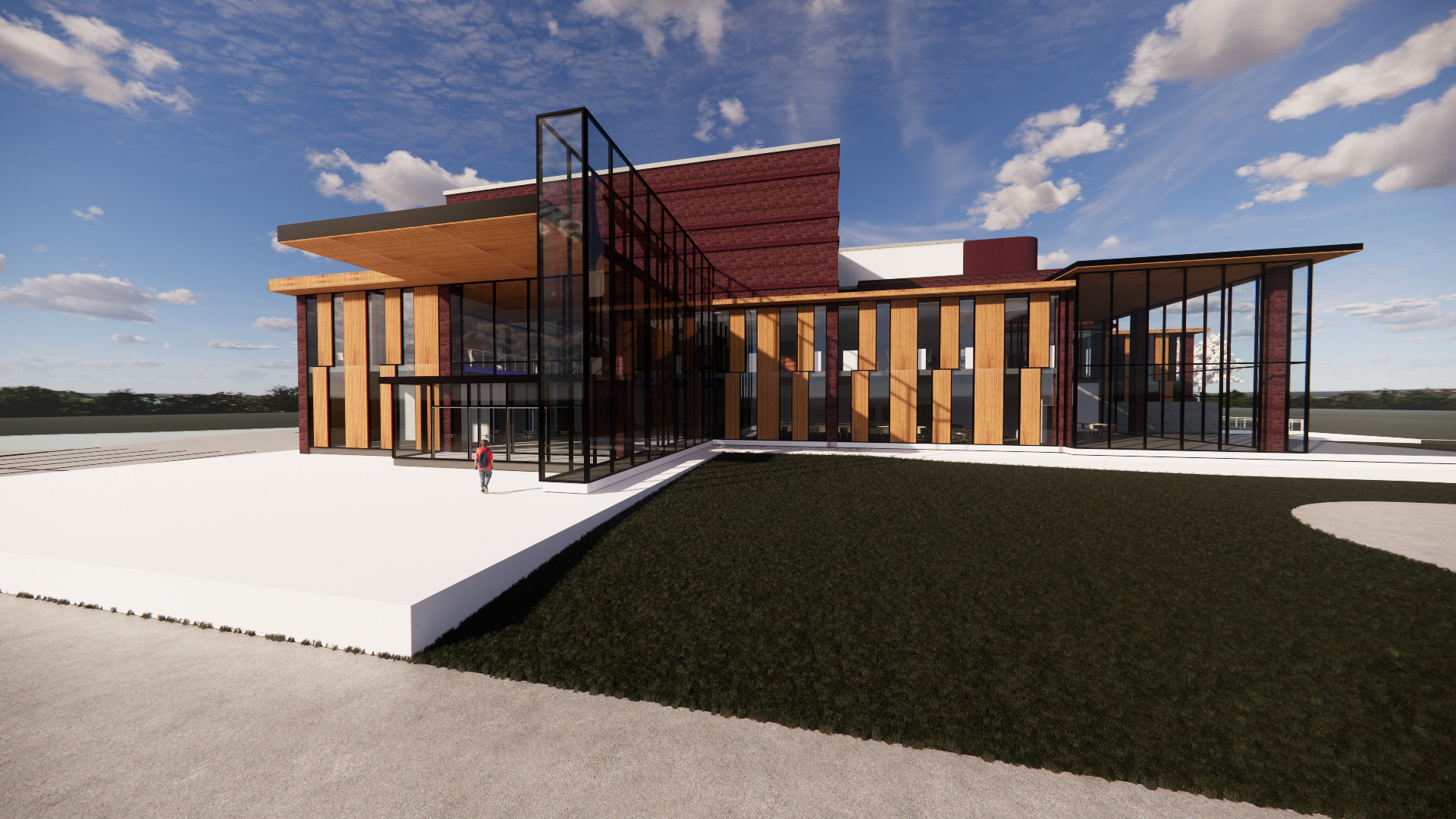
Lastly, a tall vitrine stretches the length of the new central hall, extending outward alongside the front entry to display the students' final products front and center, while speaking to the verticality of the stairwells, and the indoor-outdoor relationships of the other two project spaces.
Approach Sequence
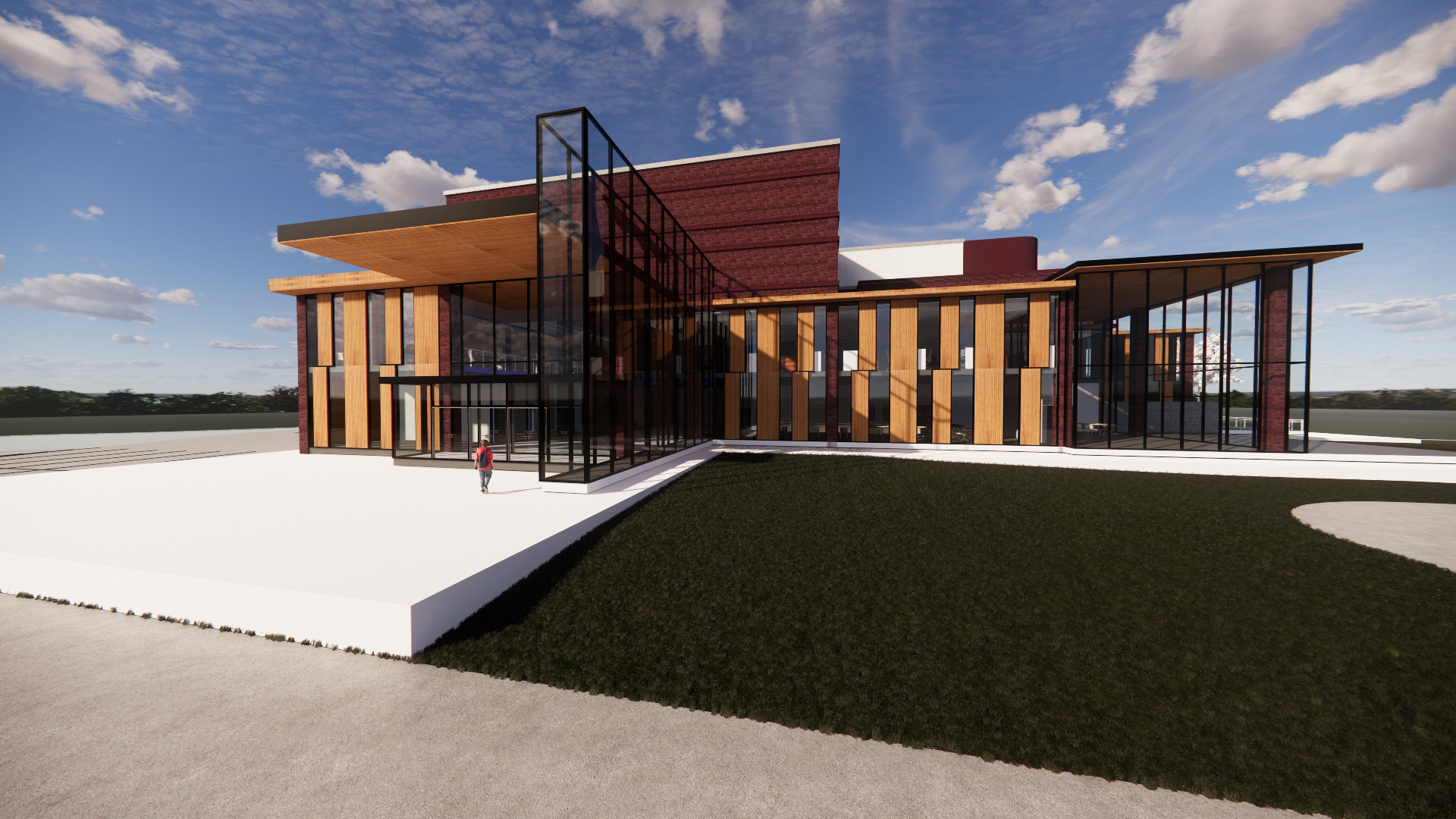
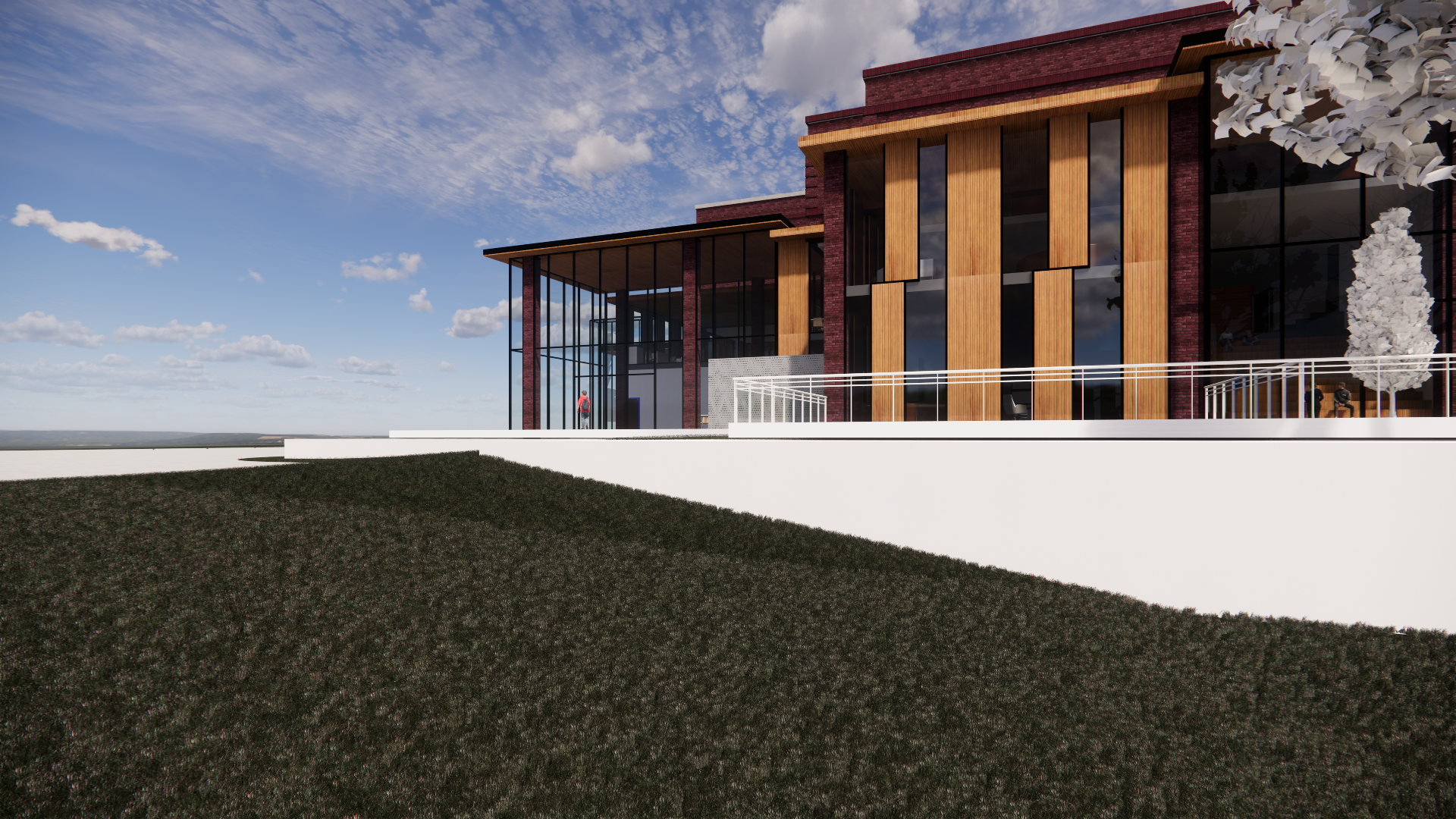
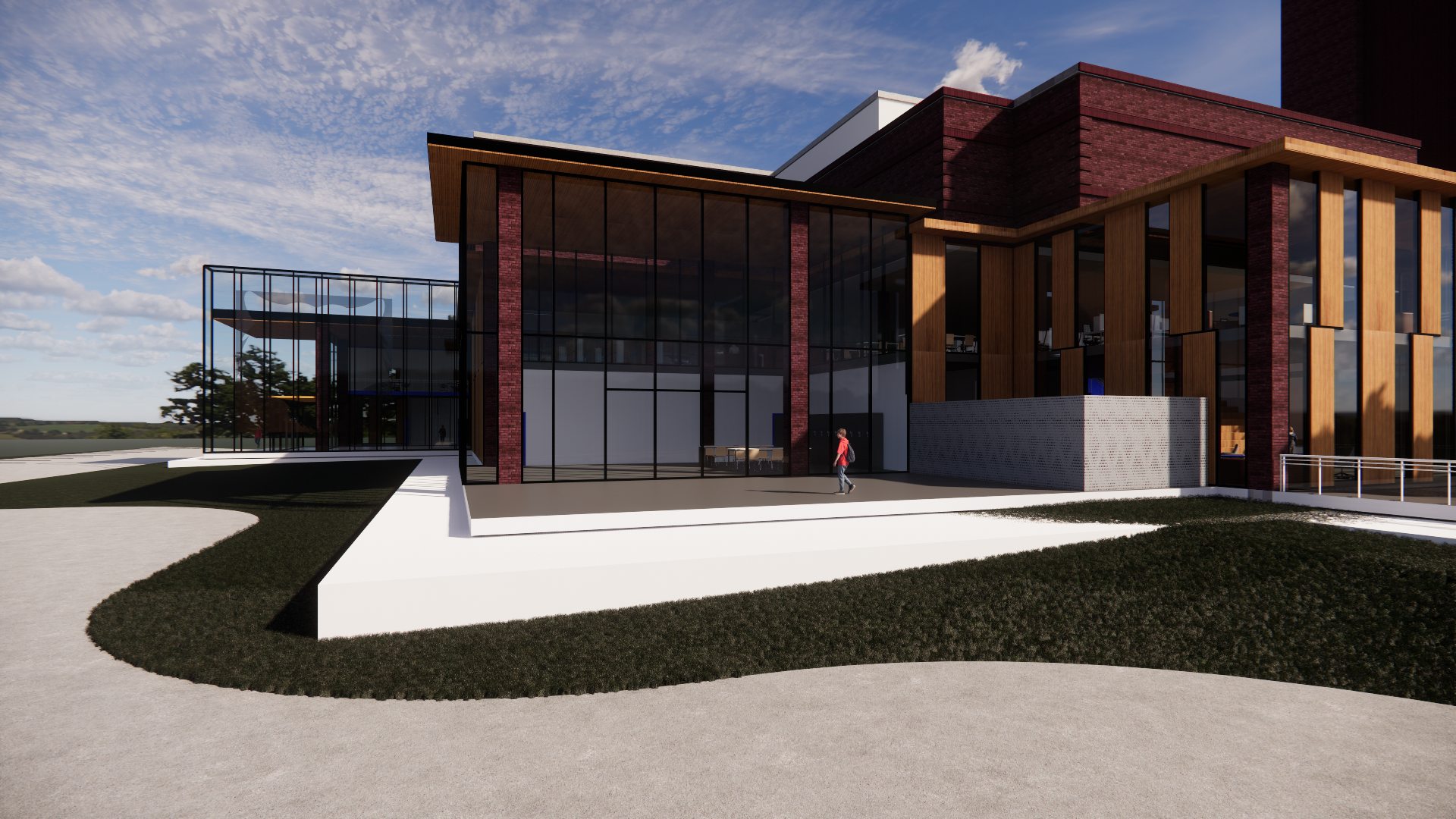
The facade went through stages of design focused on the goal of representing interior double height spaces. Vertical wood panels were placed on the glass facades of single height spaces, and offset on the seam of the floors, interrupting vertical consistency, and therefore emphasizing vertical consistency on the glass faces of double height spaces.
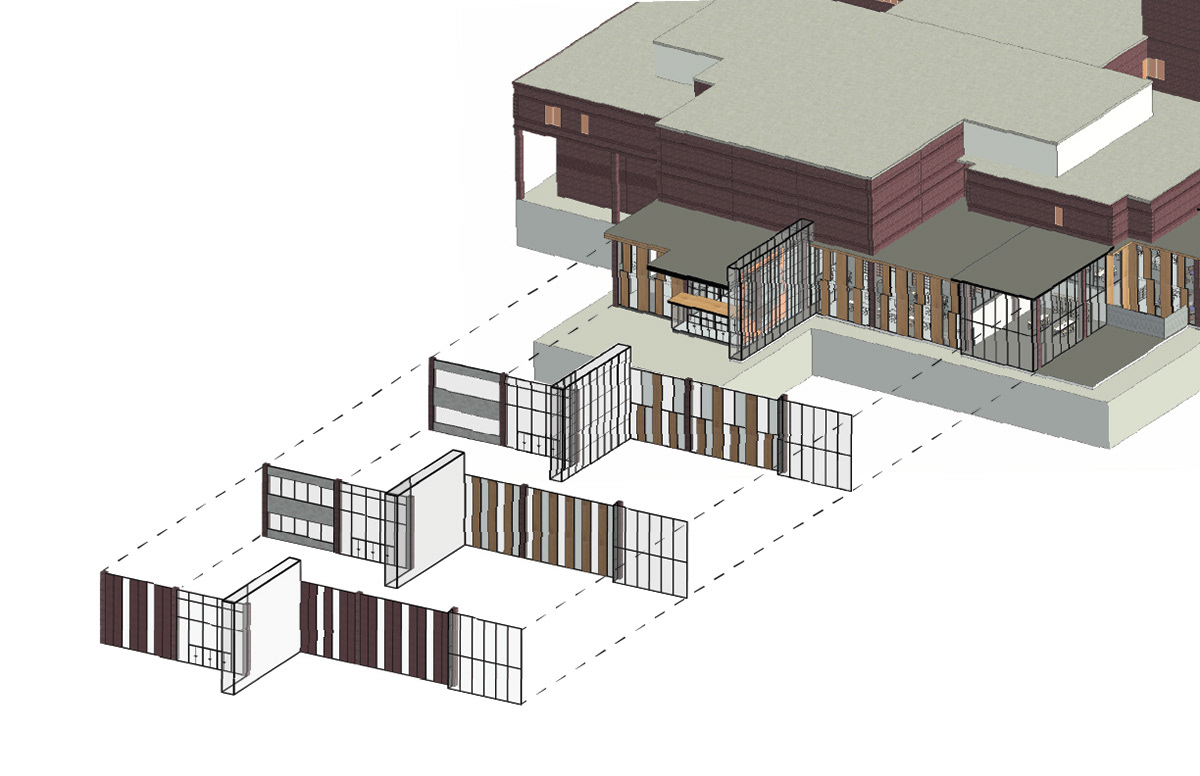
The wood panels strategically reduced sunlight to provide comfortable working and research spaces, but in their absence, the double height spaces are struck with daylight, and the opportunity to open large working doors with outdoor access, creating semi-outdoor spaces.
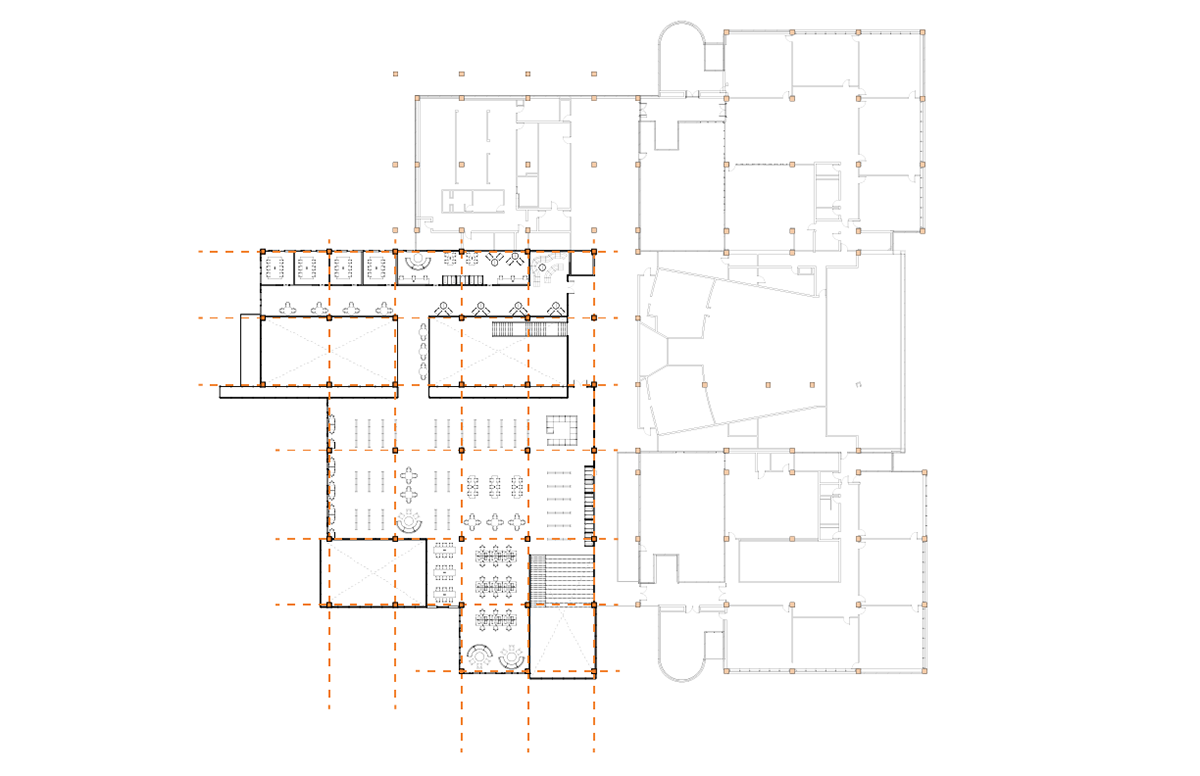
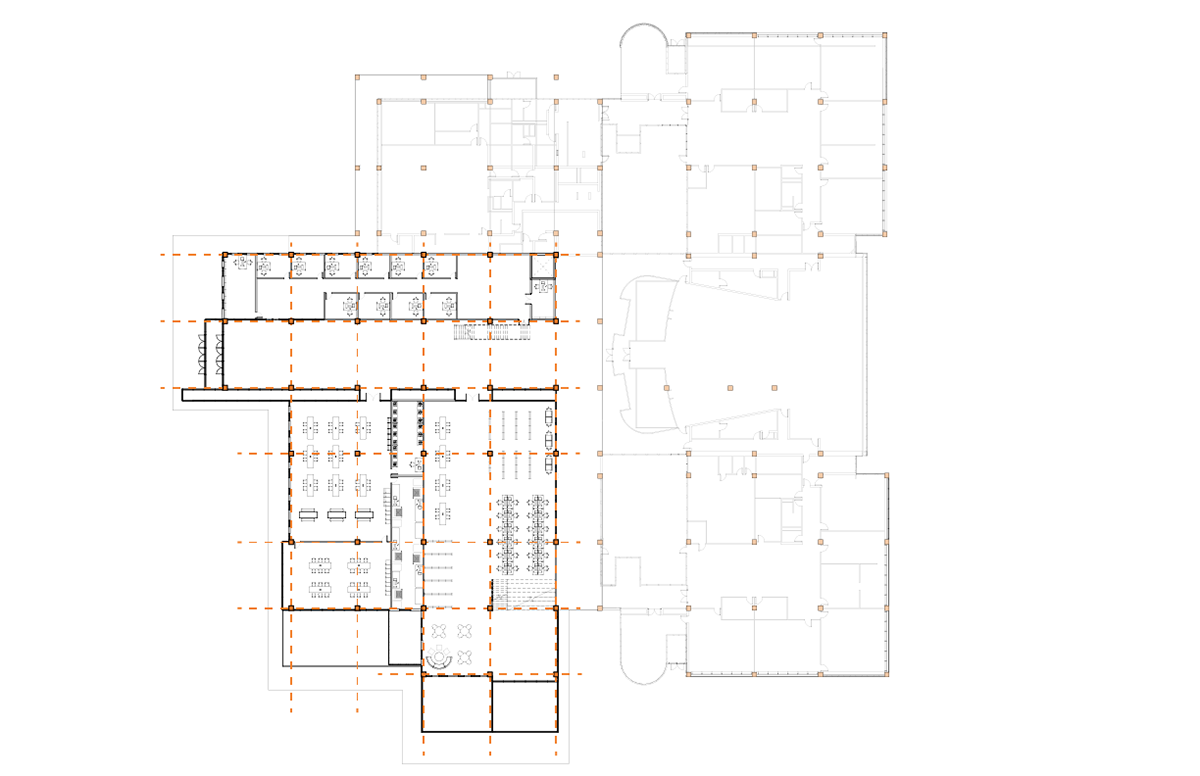
The existing structural grid was assimilated into the proposal plans to provide a conceptual anchor and structural consistency.